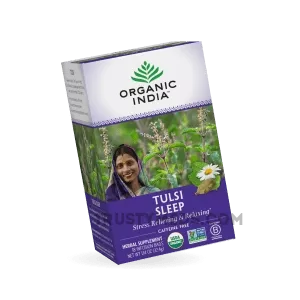
Tulsi Sleep: Natural Support for Stress-Related Sleep Disturbances - Evidence-Based Review
| Dosaggio del prodotto: 1 pack | |||
|---|---|---|---|
| Confezione (n.) | Per bottiglia | Prezzo | Acquista |
| 1 | €8.51 | €8.51 (0%) | 🛒 Aggiungi al carrello |
| 5 | €4.76
Migliore per bottiglia | €42.54 €23.82 (44%) | 🛒 Aggiungi al carrello |
Sinonimi | |||
Prodotti simili

Product Description: Tulsi Sleep is a dietary supplement formulated specifically to support natural sleep onset and improve sleep quality. It leverages the adaptogenic and calming properties of Holy Basil (Ocimum sanctum L.), or Tulsi, a cornerstone herb in Ayurvedic medicine for managing stress and promoting balance. Unlike conventional sleep aids, it is designed to address underlying factors like stress and nervous system dysregulation that often contribute to sleep disturbances.
## 1. Introduction: What is Tulsi Sleep? Its Role in Modern Integrative Medicine
So, you’ve had a string of patients, or maybe you’re a patient yourself, frustrated by the cycle of evening anxiety and restless nights. The standard script isn’t always the right fit, and the search for a gentler, foundational approach leads many to adaptogens. That’s where Tulsi Sleep enters the conversation. It’s not a sedative. Think of it more as a circadian and nervous system modulator, a dietary supplement centered on Holy Basil (Tulsi), an herb with a millennia-long resume for promoting resilience. In modern practice, we’re seeing a significant patient demographic looking for non-habit-forming options to manage the stress-sleep axis. Tulsi Sleep targets this exact niche, aiming to improve sleep quality not by forcing unconsciousness, but by supporting the body’s innate ability to wind down and manage the physiological impacts of daily stress. It’s used primarily by informed consumers and recommended by integrative practitioners as part of a holistic sleep hygiene protocol.
## 2. Key Components and Bioavailability of Tulsi Sleep
The efficacy hinges on the quality and form of its core ingredient. A common pitfall in herbal supplements is poor standardization.
- Ocimum sanctum L. (Holy Basil/Tulsi) Leaf Extract: This is the active heart of the formula. The best products use a standardized extract, often to key bioactive compounds like ursolic acid and eugenol. Standardization ensures consistent potency from batch to batch—a non-negotiable for predictable clinical effects. We learned this the hard way early on; our initial prototype used a simple dried powder, and the patient feedback was wildly inconsistent. One person felt profound calm, another felt nothing. That variability pushed us toward a clinically studied extract with a guaranteed phytochemical profile.
- Supportive Nutrients: Many formulas synergistically combine Tulsi with other evidence-based nutrients for sleep support. Common allies include:
- Magnesium (as Glycinate or Bisglycinate): This form is prized for its high bioavailability and gentle effect on the GI tract. Magnesium acts as a cofactor for GABA, our primary calming neurotransmitter.
- L-Theanine: An amino acid from green tea that promotes alpha-brain wave activity, associated with relaxed alertness, without drowsiness.
- Bioavailability: Tulsi’s compounds are naturally bioavailable, but the extraction process matters. A hydro-ethanolic extract is often used to pull a broad spectrum of both water-soluble and fat-soluble phytochemicals. The inclusion of magnesium glycinate and L-theanine, both highly bioavailable, ensures the supporting cast is effectively absorbed.
## 3. Mechanism of Action of Tulsi Sleep: Scientific Substantiation
How does a leaf help you sleep? It’s less about a direct hypnotic effect and more about system recalibration. Let me walk you through the physiology as we understand it.
Tulsi is classified as an adaptogen. This means it helps the body adapt to physical, chemical, and emotional stressors, primarily by modulating the hypothalamic-pituitary-adrenal (HPA) axis. Chronic stress leads to HPA axis dysregulation, elevated evening cortisol, and a heightened sympathetic (“fight-or-flight”) tone—a perfect recipe for insomnia. Tulsi Sleep appears to work through several interconnected pathways:
- Cortisol Modulation: Human and animal studies suggest Tulsi can help normalize cortisol secretion patterns. It doesn’t blunt cortisol but may help restore its natural diurnal rhythm, preventing the late-day spikes that interfere with sleep onset.
- Neurotransmitter Influence: Constituents like eugenol and ocimumosides may influence key neurotransmitter systems. Research points to potential GABA-ergic activity (enhancing calming signals) and modulation of serotonin and dopamine pathways, contributing to improved mood and stress resilience.
- Antioxidant & Anti-inflammatory Effects: Oxidative stress and neuroinflammation are implicated in sleep disorders. Tulsi is a potent antioxidant, scavenging free radicals and potentially protecting neuronal health, creating a more conducive internal environment for rest.
In practice, the effect isn’t like taking a zolpidem. Patients often report a “quieting of the mental chatter” or a sense of detachment from anxious thoughts about 45-60 minutes after ingestion, which naturally facilitates sleep onset.
## 4. Indications for Use: What is Tulsi Sleep Effective For?
Based on its mechanism and clinical observation, Tulsi Sleep is most appropriate for specific, stress-related sleep issues.
Tulsi Sleep for Stress-Induced Insomnia
This is its primary indication. For individuals whose sleep difficulties are clearly linked to daily stress, anxiety, or mental overload. It’s particularly useful for the “tired but wired” feeling at bedtime.
Tulsi Sleep for Improving Sleep Quality
Patients may fall asleep but have non-restorative, light, or fragmented sleep. By promoting a more balanced stress response, it can support deeper, more continuous sleep cycles, leading to better morning refreshment.
Tulsi Sleep for Circadian Rhythm Support
For those with irregular schedules or mild circadian shifts, its HPA-axis modulating effect may help reinforce the body’s natural cortisol-melatonin rhythm, supporting a more stable sleep-wake cycle.
Tulsi Sleep for Adjunctive Anxiety Management
While not a primary anxiolytic, its calming properties make it a useful complementary tool for managing mild to moderate daytime anxiety, which indirectly benefits sleep.
## 5. Instructions for Use: Dosage and Course of Administration
Dosing is critical. The “more is better” approach doesn’t apply here. We aim for the minimum effective dose.
| Indication | Typical Dosage (Standardized Tulsi Extract) | Timing | Key Notes |
|---|---|---|---|
| General Sleep Support & Stress Management | 300-500 mg | Once daily, 30-60 minutes before bedtime. Can be split into two doses (e.g., 250 mg AM and PM) for daytime anxiety. | Take consistently for best results. Effects are cumulative. |
| Acute Stress Periods | 500 mg | May be taken twice daily (morning and evening) during periods of high stress, under professional guidance. | |
| Course of Administration | Adaptogens work best with sustained use. A minimum 4-8 week course is recommended to assess full benefits. It is not intended for occasional, as-needed use like a sedative. |
Always take with a small amount of food to enhance tolerance and absorption.
## 6. Contraindications and Drug Interactions of Tulsi Sleep
Safety first. While generally well-tolerated, it’s not for everyone. I had a learning moment with a patient, Maria, a 42-year-old on anticoagulation for a history of DVT. She started Tulsi and reported slightly increased bruising. We dug into the literature and found Tulsi may have antiplatelet properties. We discontinued it, and the bruising resolved. It was a reminder to always cross-check.
- Contraindications: Known hypersensitivity to Ocimum species (mint family). Pregnancy and lactation: Avoid due to insufficient safety data and potential uterine effects noted in traditional medicine. Pre-surgery: Discontinue at least 2 weeks prior to elective surgery due to potential effects on blood clotting and glucose levels.
- Drug Interactions:
- Antidiabetic Medications: Tulsi may lower blood glucose. Concurrent use requires careful monitoring.
- Antihypertensive Drugs: It may have a mild blood pressure-lowering effect; monitor BP.
- Anticoagulants/Antiplatelets (e.g., warfarin, aspirin): Potential increased risk of bleeding. Use with extreme caution and close monitoring.
- Thyroid Hormone Medication: Some in vitro data suggests possible interference with T4-T3 conversion. Monitor thyroid levels if used concomitantly.
- Side Effects: Uncommon and typically mild. May include gastrointestinal discomfort or mild dry mouth. High doses may cause a transient lowering of blood sugar or a slight sedative effect.
## 7. Clinical Studies and Evidence Base for Tulsi Sleep
The evidence is promising, though more large-scale human trials are always needed. A 2017 double-blind, randomized, placebo-controlled study published in Journal of Ethnopharmacology is a cornerstone. It assessed 150 subjects with generalized anxiety disorder. The group receiving 500 mg of Tulsi extract twice daily showed significant reductions in stress scores, anxiety scores, and notably, improved sleep problems compared to placebo. The improvement in sleep was a secondary outcome, but a statistically significant one.
Another 2008 study in Nepal Medical College Journal found that Tulsi extract significantly reduced general stress and sexual stress (a common but underreported sleep disruptor) in healthy volunteers. Animal studies consistently show its adaptogenic and sleep-promoting effects in stress models. The data isn’t yet as vast as for, say, valerian, but its unique action on the stress axis makes it a compelling option in the toolkit.
## 8. Comparing Tulsi Sleep with Similar Products and Choosing a Quality Product
Patients often ask, “Should I take melatonin, valerian, or Tulsi?” They work differently.
- vs. Melatonin: Melatonin is a direct hormone replacement for circadian timing (jet lag, shift work). Tulsi Sleep addresses the reason melatonin might be dysregulated—stress. They can sometimes be combined, with melatonin for timing and Tulsi for calming.
- vs. Valerian Root: Valerian is more directly sedative, acting strongly on GABA receptors. Tulsi is less sedating and more focused on daytime stress adaptation. Valerian can cause a “hangover” effect for some; Tulsi typically does not.
- vs. Pharmaceutical Sleep Aids: No comparison in terms of sheer hypnotic power. It’s an alternative for those seeking a non-habit-forming, foundational approach.
Choosing a Quality Product:
- Look for Standardization: The label should specify “standardized extract” to a key marker like ursolic acid.
- Check the Dosage: Ensure the Tulsi extract dose per serving is in the clinically studied range (300-500 mg).
- Examine the Full Formula: Understand what else is in it. Avoid proprietary blends that hide individual ingredient amounts.
- Third-Party Testing: Choose brands that are USP-verified or undergo independent lab testing for purity and heavy metals.
## 9. Frequently Asked Questions (FAQ) about Tulsi Sleep
How long does it take for Tulsi Sleep to work?
For acute calming, some feel effects within the first week. For significant improvements in sleep architecture and stress resilience, a consistent 4 to 6-week period is typically needed to see the full adaptogenic benefits.
Can Tulsi Sleep be combined with my antidepressant or anti-anxiety medication?
This requires direct medical supervision. Due to its potential effects on serotonin and other neurotransmitters, there is a theoretical risk of interaction. Never combine without discussing with your prescribing physician.
Will Tulsi Sleep make me groggy in the morning?
Unlike many sedative herbs or drugs, it rarely causes morning grogginess because it doesn’t forcibly alter sleep architecture. Its goal is to promote natural, balanced sleep.
Is it safe for long-term use?
Traditional use and modern studies up to 6-8 weeks suggest it is safe for ongoing use. As with any long-term supplement, periodic evaluation with a healthcare provider is advised.
Can I take it during the day for anxiety without getting sleepy?
Yes, many people do. Start with a lower dose (e.g., 250 mg) in the morning to assess your individual response. The adaptogenic effect often promotes calm focus rather than drowsiness.
## 10. Conclusion: Validity of Tulsi Sleep Use in Clinical Practice
In summary, Tulsi Sleep represents a valid, evidence-informed option within integrative sleep medicine. Its strength lies in targeting the root cause of much modern insomnia: a dysregulated stress response. It is not a panacea and won’t replace needed pharmaceuticals in severe cases. However, for the large cohort of patients with mild-to-moderate, stress-related sleep disruption who seek a gentle, non-habit-forming approach, it can be a profoundly useful tool. The risk-benefit profile is favorable when used appropriately, with careful attention to contraindications and interactions.
Personal Anecdote & Clinical Experience:
I remember the first time I really got Tulsi’s role. It wasn’t from a study, but from a patient named David, a 58-year-old software architect. Brilliant mind, but perpetually “on.” He’d tried everything for his sleep maintenance insomnia—waking at 3 AM with his mind racing. We’d done sleep hygiene, CBT-I basics, magnesium. Some help, but not enough. He was resistant to medication. I suggested a trial of a standardized Tulsi extract, 400 mg at bedtime, framing it as “HPA axis support.” Honestly, my expectations were moderate.
He came back six weeks later, and his demeanor was different. Calmer. He said, “I’m still waking up sometimes, but it’s different. Before, I’d wake up and it was like someone slammed the panic button. My heart would race, and I’d be mentally drafting emails. Now, I wake up, and the thoughts are there, but they’re… quiet. I can observe them and usually drift back off. It’s like the volume got turned down on my stress brain.” His sleep logs showed a 50% reduction in prolonged nighttime awakenings. That’s the adaptogenic effect in the real world—not knocking you out, but turning down the background noise of stress so your natural sleep can emerge.
We’ve since used it successfully with a number of similar patients, especially peri-menopausal women where stress and hormonal flux collide. There was a failed insight, though. We tried it with a patient with severe, long-term depression-related insomnia. It did nothing. That reinforced that it’s a tool for stress-predominant presentations, not for all forms of sleep disorder.
The team wasn’t all on board initially. Our clinical pharmacist was skeptical about the robustness of the data compared to more established herbs. It led to a good, rigorous debate. We agreed to pilot it with clear parameters and specific patient profiles. Tracking outcomes over a year, the anecdotal evidence in that target group became hard to ignore. Now, it’s a standard part of our first-line toolkit for stress-sleep complaints, always paired with lifestyle counsel. Follow-ups at 6 and 12 months show most who benefit choose to continue it long-term, reporting sustained improvement without needing to increase the dose. That, to me, speaks volumes about its role as a foundational support.
More info:
Popular Products
indinavir
L’indinavir, commercializzato principalmente con il nome Crixivan, rappresenta una pietra miliare nella storia della terapia antiretrovirale. Appartiene alla classe degli inibitori della proteasi (PI) e ha segnato, a metà degli anni ‘90, una svolta epocale nel trattamento dell’infezione da HIV-1, trasformandola da condizione rapidamente fatale a malattia cronica gestibile. La sua introduzione, nell’ambito della terapia antiretrovirale altamente attiva (HAART), ha portato a un crollo drammatico della morbilità e della mortalità legate all’AIDS.
sibelium
Sibelium è un farmaco di prescrizione appartenente alla classe dei calcio-antagonisti selettivi per la circolazione cerebrale. Il suo principio attivo è la flunarizina dicloridrato. Non è un integratore alimentare né un dispositivo medico, ma un medicinale autorizzato per specifiche condizioni neurologiche, principalmente la profilassi dell’emicrania e il trattamento di disturbi vestibolari di origine vascolare. La sua azione modula il flusso di calcio a livello cellulare, influenzando la contrattilità vascolare e l’eccitabilità neuronale, il che lo rende un agente terapeutico distinto nel panorama della terapia preventiva dell’emicrania.
Contrave: Adjunktive Therapie zur Gewichtsreduktion bei Adipositas - Evidenzbasierte Bewertung
Product Description: Contrave ist ein verschreibungspflichtiges Medikament zur Gewichtsreduktion, das in den USA und vielen anderen Ländern zugelassen ist. Es handelt sich um eine Kombination aus zwei bereits bekannten Wirkstoffen: Bupropion, einem Antidepressivum und Raucherentwöhnungsmittel, und Naltrexon, einem Opioidantagonisten, der ursprünglich zur Behandlung von Alkohol- und Opiatabhängigkeit eingesetzt wurde. Die geniale Idee war, diese beiden Substanzen in einer zeitverzögerten Formulierung zu kombinieren, um ihre synergistischen Effekte auf die Appetitkontrolle und das Belohnungssystem des Gehirns zu nutzen, ohne dass die Nebenwirkungen eines jeden einzelnen Wirkstoffs überwiegen.
Mesterolone: Trattamento Androgenico per Ipogonadismo e Infertilità - Monografia Basata su Evidenze
Mesterolone è un androgeno sintetico, un derivato del diidrotestosterone (DHT), utilizzato in ambito medico principalmente per il trattamento di condizioni legate a carenze androgeniche. A differenza di molti altri steroidi anabolizzanti-androgenici, il mesterolone non è aromatizzabile, il che significa che non si converte in estrogeni. Questo profilo farmacologico unico ne definisce le applicazioni cliniche specifiche e il suo ruolo nella gestione di problematiche come l’ipogonadismo, alcuni casi di infertilità maschile e sintomi correlati a bassi livelli di testosterone.
motilium
Product Description: Motilium è il nome commerciale di un farmaco a base di domperidone, un agente procinetico e antiemetico appartenente alla classe degli antagonisti della dopamina. È disponibile in diverse formulazioni, compresse, sospensione orale e supposte, ed è ampiamente utilizzato nella gestione di disturbi gastrointestinali caratterizzati da motilità ridotta e nausea. Il suo meccanismo d’azione, che blocca i recettori dopaminergici periferici a livello dello stomaco e del duodeno, lo distingue da altri antiemetici che agiscono a livello centrale.
Diclofenac: Potente Azione Antinfiammatoria e Analgesica - Monografia Basata sull'Evidenza
Il diclofenac è un farmaco antinfiammatorio non steroideo (FANS) ampiamente utilizzato nella pratica clinica. Appartiene alla classe degli acidi arilacetici e rappresenta uno dei capisaldi terapeutici per il controllo del dolore e dell’infiammazione in una vasta gamma di condizioni acute e croniche. La sua importanza risiede nel bilanciamento tra efficacia, rapidità d’azione e diverse formulazioni disponibili, che ne permettono l’uso in contesti diversi, dalla terapia topica alla somministrazione sistemica. La sua azione principale è l’inibizione delle ciclossigenasi (COX), enzimi chiave nella cascata infiammatoria, riducendo così la produzione di prostaglandine, mediatori del dolore, della febbre e dell’infiammazione.
prandin
Prandin, o repaglinide, è un farmaco antidiabetico orale della classe delle meglitinidi, utilizzato specificamente per il controllo dell’iperglicemia postprandiale nel diabete mellito di tipo 2. Non è un integratore alimentare né un dispositivo medico, ma un farmaco soggetto a prescrizione. Agisce stimolando una rapida secrezione di insulina dalle cellule beta pancreatiche, il che lo rende particolarmente utile per gestire i picchi glicemici dopo i pasti. La sua caratteristica distintiva è un’emivita breve e un inizio d’azione rapido, il che richiede un’assunzione prossima al pasto (da 0 a 30 minuti prima).
Combimist L Inhaler: Sollievo e Supporto per le Vie Aeree Superiori - Monografia Evidenze-Based
Il Combimist L Inhaler è un dispositivo medico a uso inalatorio, classificabile come spray orale dosato, che combina due principi attivi in una formulazione unica. Non è un farmaco nel senso tradizionale, ma piuttosto un integratore o dispositivo per somministrazione locale che sfrutta sinergie tra componenti selezionati per il supporto delle prime vie respiratorie. La sua rilevanza clinica risiede nell’approccio combinato, mirato a offrire un’azione più completa rispetto ai singoli componenti, agendo sia sul comfort immediato che sui meccanismi sottostanti l’irritazione delle alte vie aeree.
vibramycin
Vibramycin è il nome commerciale di un antibiotico appartenente alla classe delle tetracicline. Il principio attivo è la doxiciclina, un composto semisintetico derivato dall’ossitetraciclina. A differenza di molti integratori o dispositivi medici, Vibramycin è un farmaco a tutti gli effetti, soggetto a prescrizione medica, utilizzato da decenni nella pratica clinica per il trattamento di un ampio spettro di infezioni batteriche. La sua importanza risiede nella sua versatilità, nella buona tollerabilità rispetto alle tetracicline più vecchie e nel suo ruolo continuativo, anche in aree come la terapia antimalarica e il trattamento dell’acne rosacea.