Plan B: Emergency Contraceptive for Post-Coital Pregnancy Prevention - Evidence-Based Review
| Dosaggio del prodotto: 1.5 mg | |||
|---|---|---|---|
| Confezione (n.) | Per compresse | Prezzo | Acquista |
| 8 | €6.38 | €51.08 (0%) | 🛒 Aggiungi al carrello |
| 12 | €5.18 | €76.62 €62.15 (19%) | 🛒 Aggiungi al carrello |
| 18 | €4.64 | €114.93 €83.43 (27%) | 🛒 Aggiungi al carrello |
| 24 | €4.15 | €153.24 €99.61 (35%) | 🛒 Aggiungi al carrello |
| 30 | €3.75
Migliore per compresse | €191.55 €112.38 (41%) | 🛒 Aggiungi al carrello |






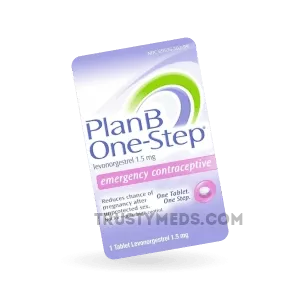
Product Description: Plan B, often referred to colloquially as the “morning-after pill,” is an emergency contraceptive (EC) product. Its active ingredient is levonorgestrel, a synthetic progestin. It is not an abortifacient; it works primarily by delaying or inhibiting ovulation, thereby preventing fertilization from occurring in the first place. It is a single-dose oral tablet intended for use after unprotected intercourse or contraceptive failure (e.g., condom breakage). It’s a critical option for preventing unintended pregnancy, but it is not intended as a regular method of birth control.
1. Introduction: What is Plan B? Its Role in Modern Reproductive Health
So, let’s talk about Plan B. In the clinic, when a patient comes in anxious after a contraceptive mishap, this is often the first option we discuss. It’s not “regular birth control,” and I have to stress that repeatedly. It’s a safety net. What is Plan B used for? Specifically, it’s for those moments when primary contraception fails or wasn’t used—a broken condom, a missed pill, or cases of sexual assault. Its significance is immense; it represents a point-of-care intervention that empowers individuals to take immediate action to prevent an unintended pregnancy. The sheer volume of searches for “what is Plan B” and “how to get Plan B” tells you about the need. It’s moved from behind pharmacy counters to over-the-counter shelves, which has been a major public health win, but it also means people are using it without always getting the full picture. That’s where we need to step in with clear, clinical information.
2. Key Component and Bioavailability of Plan B
The composition of Plan B is straightforward: a single 1.5 mg tablet of levonorgestrel. That’s it. No estrogen. This is a key point because it minimizes the side effect profile compared to older combined hormone ECs. Levonorgestrel is a well-characterized synthetic progestin used in many regular oral contraceptives, just at a higher, single dose for this indication.
Now, regarding its release form and bioavailability: it’s a standard oral tablet. Absorption is pretty reliable when taken on an empty stomach, though it can be taken with food if nausea is a concern (more on that later). The pharmacokinetics show it’s rapidly absorbed, with peak serum concentrations hitting within about 2 hours. The high dose is necessary to achieve the swift hormonal surge required to disrupt the follicular cycle. There’s no fancy delivery system here—the efficacy hinges on the dose and, most critically, the timing of administration.
3. Mechanism of Action of Plan B: Scientific Substantiation
How does Plan B work? This is where I spend time correcting misconceptions. I’ve had patients whisper, “Is it like an abortion pill?” Absolutely not. The primary and most evidence-supported mechanism of action for levonorgestrel EC is the delay or inhibition of ovulation. It works before conception. Here’s the biochemistry, simplified: for pregnancy to occur, an ovary must release an egg (ovulation), which then can be fertilized. The luteinizing hormone (LH) surge triggers ovulation. Plan B, taken in time, suppresses that LH surge. No surge, no egg release. If there’s no egg in the fallopian tube, sperm has nothing to fertilize.
The scientific research also suggests it may thicken cervical mucus, creating a more hostile barrier for sperm, and could potentially alter the endometrium, though the latter’s clinical significance in preventing implantation is considered secondary and less certain. The crucial takeaway from the mechanism of action is this: it is pre-fertilization. It prevents the union of egg and sperm. If ovulation has already occurred, its effectiveness drops significantly, which is why timing is so non-negotiable.
4. Indications for Use: What is Plan B Effective For?
The indication is singular but vital: emergency contraception to prevent pregnancy after known or suspected contraceptive failure or unprotected intercourse. We can break down the scenarios, which align with common patient queries.
Plan B for Condom Breakage or Slippage
This is the classic presentation. The efficacy here is high if taken promptly.
Plan B for Missed Oral Contraceptive Pills
For patients on combined pills who miss 2 or more active pills in the first week of a pack and have unprotected sex, EC is recommended. For progestin-only pills, the threshold is lower—any missed pill with unprotected sex warrants consideration.
Plan B After Sexual Assault
It is a standard component of care in hospital emergency departments following a sexual assault, offered as part of a comprehensive treatment plan that includes STI prophylaxis and counseling.
Plan B as a Backup (Not a Primary Method)
This bears repeating. It is not effective for treatment or prevention of any other condition. Its use for “regular” birth control is inappropriate due to lower efficacy, higher side effects, and cost compared to established ongoing methods.
5. Instructions for Use: Dosage and Course of Administration
The instructions for use are simple, but the details matter. The standard dosage is one 1.5 mg levonorgestrel tablet taken orally as a single dose. The “course of administration” is one-time.
Timing is Everything: The mantra is “the sooner, the better.” Efficacy is highest when taken within 72 hours (3 days) post-intercourse, but it is FDA-approved for use up to 120 hours (5 days). However, data shows a clear decline in effectiveness with each passing day. Some studies suggest it may be less effective in women with higher BMI; for these patients, we might discuss ulipristal acetate (ella) as a potentially more effective option.
| Scenario | Dosage | Timing Key | Administration Notes |
|---|---|---|---|
| Standard Use | 1.5 mg (one tablet) | Within 72 hours, ideally <24h | Can be taken with or without food. Taking with food may reduce nausea. |
| Extended Window | 1.5 mg (one tablet) | Up to 120 hours | Recognize that efficacy decreases after 72 hours. |
| Post-Vomiting | 1.5 mg (one tablet) | Immediately after intercourse | If vomiting occurs within 2 hours of ingestion, a repeat dose should be taken. |
Side effects are usually mild and transient: nausea (about 20%), abdominal pain, fatigue, headache, and menstrual changes. The next period may come earlier or later than expected. If a period is delayed by more than a week, pregnancy testing is advised.
6. Contraindications and Drug Interactions with Plan B
Is Plan B safe? For the vast majority, yes. There are very few absolute contraindications. A known allergy to levonorgestrel is the primary one. It is not contraindicated in most chronic conditions like hypertension or diabetes. Importantly, it is not contraindicated in cases of established pregnancy; it simply won’t work and won’t harm an existing pregnancy—this is a common fear we need to allay.
Drug interactions are worth noting. Medications that induce liver enzymes (cytochrome P450 3A4) can potentially lower levonorgestrel levels and reduce EC efficacy. Key ones include:
- Barbiturates
- Bosentan
- Carbamazepine
- Felbamate
- Griseofulvin
- Oxcarbazepine
- Phenytoin
- Rifampin
- St. John’s Wort
- Topiramate
For patients on these long-term therapies, a copper IUD is the most effective EC option. Regarding pregnancy and breastfeeding: it is not recommended for routine use, but if needed during breastfeeding, the recommendation is to take the dose immediately after a feeding and consider pumping and discarding milk for 24 hours (though data on milk transfer is limited).
7. Clinical Studies and Evidence Base for Plan B
The clinical studies on levonorgestrel EC are robust. The landmark WHO multicentre trial cemented its role. The data consistently shows it reduces the risk of pregnancy by about 75-89% when used within 72 hours. To put numbers on it: without any treatment, about 8 in 100 women would become pregnant after a single act of unprotected intercourse in the fertile window. With Plan B taken within 72 hours, that number drops to about 1-2 in 100.
The scientific evidence also clarified the timing issue. A meta-analysis in Human Reproduction showed efficacy was 95% if used within 24 hours, 85% within 25-48 hours, and 58% within 49-72 hours. This gradient is why we hammer the “sooner” message. Physician reviews in journals like Obstetrics & Gynecology consistently support its safety and role. The move to OTC status was heavily supported by this evidence, demonstrating that consumers could use it safely and effectively without a prescription.
8. Comparing Plan B with Similar Products and Choosing
When patients ask, “Which emergency contraception is better?” we’re usually comparing Plan B (levonorgestrel 1.5mg) with ella (ulipristal acetate 30mg) and the copper IUD.
| Feature | Plan B (Levonorgestrel) | ella (Ulipristal Acetate) | Copper IUD |
|---|---|---|---|
| Window of Use | Up to 120 hours (best <72h) | Up to 120 hours | Up to 120 hours (most effective EC) |
| Prescription Needed | No (OTC) | Yes | Yes (requires insertion) |
| Primary Mechanism | Delays ovulation | Blocks ovulation (even later in cycle) | Prevents fertilization/implantation |
| Efficacy | High within 24h, declines after | Consistently high across 5 days | >99% for EC; provides ongoing contraception |
| BMI Considerations | May be less effective if BMI >25-30 | Effective across BMI ranges | Unaffected by BMI |
| Cost | Moderate (OTC cost) | Higher (plus clinic visit) | High upfront, cost-effective long-term |
How to choose? For most straightforward cases within 3 days, OTC Plan B is accessible and effective. If it’s been 3-5 days, or for individuals with higher BMI, ella may be preferable but requires a prescription. The copper IUD is the gold standard for efficacy and offers the bonus of long-term, highly effective contraception afterward.
9. Frequently Asked Questions (FAQ) about Plan B
How many times can you take Plan B in a month?
It is safe for repeated use, but it is not recommended as a routine method. Its efficacy for repeated acts in the same cycle is uncertain, and frequent use leads to more side effects and irregular bleeding. It’s a sign that a more reliable, ongoing contraceptive method is needed.
Will Plan B affect my fertility in the future?
No. There is no evidence that levonorgestrel EC impacts future fertility. It is a one-time hormonal dose that clears the system quickly. Fertility returns rapidly, so ongoing contraception is required immediately to prevent subsequent pregnancy.
Can you drink alcohol after taking Plan B?
There is no direct interaction. However, since nausea is a common side effect, combining it with alcohol might worsen stomach upset. It’s prudent to avoid alcohol until any side effects pass.
Does Plan B protect against sexually transmitted infections (STIs)?
Absolutely not. It provides zero protection against HIV or other STIs. STI testing and prevention (condoms) are separate, critical considerations after unprotected sex.
10. Conclusion: Validity of Plan B Use in Clinical Practice
The risk-benefit profile for Plan B is overwhelmingly positive. It is a safe, effective, and accessible tool for preventing unintended pregnancy after contraceptive failure. Its validity in clinical practice is firmly established by decades of evidence. While not a substitute for consistent primary contraception, it is an essential component of comprehensive reproductive healthcare. The final, expert recommendation is to use it as directed, as soon as possible after need arises, and to follow up with a healthcare provider to establish or continue an effective ongoing birth control method.
Personal Anecdote & Clinical Experience:
You know, when it first went OTC, some of the older partners in my practice were skeptical. “They’ll abuse it,” one said. “They won’t bother with real contraception.” I remember we had a few tense meetings about whether our clinic should do more proactive education or just let the pharmacies handle it. I argued for education—turns out we were both a bit wrong and a bit right.
The case that sticks with me is Maria, a 22-year-old grad student. She came in not for Plan B, but for a well-woman exam about 6 months after she’d used it. She’d gotten it at a pharmacy after a condom broke. She told me, “Getting it was easy, but then I was just waiting, terrified my period wouldn’t come. I was googling everything, reading horror stories.” That’s the gap—the easy access versus the post-dose anxiety and information vacuum. She wasn’t “abusing” it; she used it correctly, once, and it worked. But the experience scared her into seeking a more reliable method, which is how she ended up with me discussing IUDs. That’s the ideal pathway, honestly.
Then there was David, a trans man on testosterone. His partner’s IUD had partially expelled. The pharmacy gave his partner a hard time, asking intrusive questions. He called our clinic, frustrated. We got him a script for ella instead due to his BMI, but it highlighted how the “over-the-counter” experience isn’t uniformly accessible or comfortable for everyone. Our team disagreed on protocol here—our NP wanted to just call in Plan B for simplicity, but I pushed for the clinical nuance of considering BMI and drug interactions, even for an “OTC” product. It caused a bit of friction, but we landed on a better triage protocol for our phone line.
The failed insight? We initially thought making it OTC would drastically reduce our EC-related visits. It didn’t. It just changed their nature. Fewer “I need it now” panicked appointments, but more “I used it, now what?” and “Is this normal?” follow-ups. The need for counseling didn’t disappear; it shifted downstream.
Longitudinal follow-up on patients like Maria shows the pattern: a crisis use of EC often becomes a teachable moment for contraceptive counseling. I’ve seen it lead to higher long-term adherence to LARC methods. The patient testimonials aren’t usually “Plan B was great!"—they’re “I’m so glad it was there when I needed it, and now I have this IUD and don’t have to worry like that again.” That’s the real-world outcome we should be measuring. It’s not a perfect product—the timing pressure, the side effects, the BMI question—but as a safety net, it’s indispensable. And watching the clinical landscape evolve around it, from prescription-only controversy to a standard shelf item, has been a lesson in both public health and practical patient care.
More info:
Popular Products
calan
Il prodotto in questione, Calan, è un farmaco ben consolidato nella pratica clinica, non un integratore alimentare o un dispositivo medico. Il suo principio attivo è il verapamil cloridrato, un antagonista dei canali del calcio di classe non-dihidropiridinica. Viene utilizzato da decenni principalmente nella gestione dell’ipertensione arteriosa, dell’angina pectoris e di alcune aritmie cardiache, come la fibrillazione atriale o il flutter atriale per il controllo della frequenza ventricolare. La sua azione si esplica attraverso il blocco dei canali del calcio di tipo L a livello cardiaco e vascolare, portando a vasodilatazione, riduzione della resistenza vascolare periferica e un modesto effetto inotropo e cronotropo negativo.
benoquin cream
Benoquin Cream, con il suo principio attivo monobenzone, rappresenta un approccio terapeutico unico e irreversibile nel panorama della dermatologia. Non è un trattamento da prendere alla leggera. Viene utilizzato per il depigmentamento definitivo della pelle in casi di vitiligine universale, estesa e non responsiva, dove la perdita di melanina è così diffusa che ripristinare il colore risulta impossibile o esteticamente insoddisfacente. L’obiettivo, quindi, si capovolge: invece di ripigmentare le chiazze bianche, si depigmenta la pelle rimasta pigmentata per ottenere un colorito uniforme.
Methotrexate: Terapia Fondamentale nelle Malattie Autoimmuni e Oncologiche - Monografia Evidenze-Based
Methotrexate è un farmaco antimetabolita appartenente alla classe degli antagonisti dell’acido folico. È uno dei farmaci modificanti il decorso della malattia (DMARD) più utilizzati e studiati in reumatologia, dermatologia ed oncologia. La sua storia è affascinante: nato come chemioterapico per le leucemie negli anni ’40, il suo utilizzo a basse dosi settimanali per le malattie autoimmuni ha rivoluzionato la terapia di condizioni come l’artrite reumatoide, rendendolo una pietra angolare del trattamento.
adalat
Adalat, il cui principio attivo è la nifedipina, rappresenta una pietra miliare nella classe terapeutica dei calcio-antagonisti diidropiridinici. Introdotto negli anni ‘70, ha rivoluzionato l’approccio alla gestione delle patologie cardiovascolari legate al vasospasmo e all’ipertensione arteriosa. La sua evoluzione dalle formulazioni a rapido rilascio, associate a effetti emodinamici talvolta imprevedibili, alle moderne forme a rilascio modificato (GITS - Gastrointestinal Therapeutic System o ritardo) ne ha plasmato la storia, trasformandolo da farmaco sintomatico a cardine della terapia cronica.
Frumil: Trattamento Diuretico Combinato per Ipertensione ed Edemi - Monografia Evidence-Based
Frumil è un diuretico combinato, un farmaco di prescrizione ben consolidato nella pratica clinica, non un integratore alimentare o un dispositivo medico. Contiene due principi attivi: furosemide (un diuretico dell’ansa) e amiloride cloridrato (un diuretico risparmiatore di potassio). Questa combinazione sinergica è progettata per potenziare l’escrezione di sodio e acqua riducendo al contempo il rischio di ipokaliemia, un effetto collaterale comune dei diuretici come la furosemide da sola. È un pilastro nel trattamento dell’ipertensione arteriosa e degli edemi associati a scompenso cardiaco congestizio, cirrosi epatica e sindrome nefrosica.
antivert
Antivert è il nome commerciale di un farmaco da prescrizione il cui principio attivo è la meclizina cloridrato. Appartiene alla classe degli antistaminici antimuscarinici ed è utilizzato principalmente per il trattamento e la prevenzione di nausea, vomito e vertigini associati a condizioni come la cinetosi (mal d’auto, mal di mare, mal d’aria) e disturbi dell’orecchio interno, come la vertigine parossistica posizionale benigna (VPPB) e la malattia di Ménière. Non è un integratore alimentare, ma un farmaco approvato dalle autorità regolatorie (come la FDA negli USA e l’AIFA in Italia) per specifiche indicazioni mediche.
Ascorbic Acid: Dukungan Esensial untuk Fungsi Imun dan Sintesis Kolagen - Tinjauan Berbasis Bukti
Ascorbic acid, atau yang lebih dikenal sebagai vitamin C, adalah nutrisi esensial yang larut dalam air dengan peran krusial dalam berbagai fungsi fisiologis. Sebagai suplemen makanan dan zat farmasi, bentuk sintetisnya identik secara kimiawi dengan yang ditemukan dalam makanan alami seperti jeruk dan brokoli. Dalam praktik klinis modern, ascorbic acid telah melampaui konsep tradisionalnya sebagai pencegah scurvy, berkembang menjadi subjek penelitian intensif untuk aplikasi terapeutiknya yang potensial, mulai dari fungsi imun hingga kesehatan pembuluh darah dan integritas jaringan ikat.
Ayurslim: Supporto alla Gestione del Peso Corporeo - Revisione Basata sull'Evidenza
Ayurslim è un integratore alimentare a base di estratti vegetali ayurvedici, formulato specificamente per supportare la gestione del peso corporeo. La sua composizione sinergica di principi attivi derivati da piante come Garcinia cambogia, Gymnema sylvestre, Commiphora wightii (guggul) e Piper nigrum (pepe nero) agisce su più fronti: modulando il metabolismo dei lipidi, supportando il controllo dell’appetito e contribuendo al mantenimento di livelli di zucchero nel sangue già nella norma. Non è un farmaco, ma un dispositivo medico o integratore che trova il suo razionale in un approccio integrato al benessere, affiancando una dieta equilibrata e uno stile di vita attivo.
Iverjohn (Ivermectina): Trattamento Antiparassitario Ad Ampio Spettro - Monografia Evidenze-Based
Il prodotto in questione, Iverjohn, è un farmaco generico il cui principio attivo è l’Ivermectina. Appartiene alla classe degli antielmintici e antiparassitari ad ampio spettro. È disponibile in diverse formulazioni, tra cui compresse, spesso utilizzate in ambito umano per il trattamento di specifiche infestazioni parassitarie. La sua importanza nella medicina moderna, specialmente in ambito di salute globale e nelle regioni a risorse limitate, è stata significativa, contribuendo al controllo di malattie tropicali neglette.