PhosLo: Effective Phosphate Control for Dialysis Patients - An Evidence-Based Review
| Dosaggio del prodotto: 667mg | |||
|---|---|---|---|
| Confezione (n.) | Per compresse | Prezzo | Acquista |
| 20 | €2.04 | €40.89 (0%) | 🛒 Aggiungi al carrello |
| 30 | €1.48 | €61.34 €44.30 (28%) | 🛒 Aggiungi al carrello |
| 60 | €0.91 | €122.67 €54.52 (56%) | 🛒 Aggiungi al carrello |
| 90 | €0.72 | €184.01 €64.74 (65%) | 🛒 Aggiungi al carrello |
| 120 | €0.62 | €245.35 €74.97 (69%) | 🛒 Aggiungi al carrello |
| 180 | €0.53 | €368.02 €95.41 (74%) | 🛒 Aggiungi al carrello |
| 270 | €0.52 | €552.03 €139.71 (75%) | 🛒 Aggiungi al carrello |
| 360 | €0.51
Migliore per compresse | €736.04 €184.86 (75%) | 🛒 Aggiungi al carrello |
Sinonimi | |||
Prodotti simili



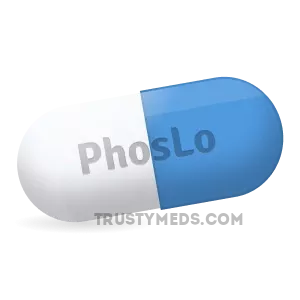
Product Description: PhosLo is a calcium acetate-based phosphate binder used in the management of hyperphosphatemia in patients with end-stage renal disease (ESRD) on dialysis. It works by binding to dietary phosphate in the gastrointestinal tract, forming an insoluble complex that is excreted in the feces, thereby reducing serum phosphate levels. Available in gelcap and tablet forms, it is a cornerstone therapy for preventing the severe complications of mineral and bone disorder associated with chronic kidney disease.
1. Introduction: What is PhosLo? Its Role in Modern Nephrology
In the complex management of end-stage renal disease (ESRD), controlling serum phosphate is not just a target; it’s a relentless daily battle with profound implications. PhosLo, the brand name for calcium acetate, enters this fray as a first-line phosphate binder. So, what is it used for? Fundamentally, it addresses hyperphosphatemia—a condition where phosphate accumulates in the blood because failing kidneys can no longer excrete it. This isn’t a minor lab abnormality. Unchecked hyperphosphatemia directly contributes to secondary hyperparathyroidism, renal osteodystrophy (a debilitating bone disease), and, most critically, widespread vascular calcification that skyrockets cardiovascular risk. Cardiovascular events are the leading cause of death in the dialysis population. Therefore, the benefits of PhosLo and similar agents extend beyond a number on a lab report; they are about preserving bone integrity and, more importantly, vascular health. Its medical applications are squarely in nephrology, serving as an essential tool for nephrologists and dialysis teams to improve patient outcomes and quality of life.
2. Key Components and Bioavailability of PhosLo
The composition of PhosLo is deceptively simple: calcium acetate. Each 667 mg gelcap or tablet provides 169 mg of elemental calcium. But the choice of acetate as the salt is pharmacologically intentional. Unlike older agents like calcium carbonate, calcium acetate has a distinct advantage in the acidic environment of the stomach. It binds phosphate more efficiently at a lower pH. This translates to a higher phosphate-binding capacity per milligram of elemental calcium. In practical terms, you often need less total calcium load to achieve the same phosphate control compared to carbonate salts, which is a significant consideration given the risks of hypercalcemia.
Bioavailability of the calcium component is a double-edged sword. Approximately 20-30% of the elemental calcium in PhosLo can be absorbed systemically. This is beneficial for providing a calcium supplement to combat hypocalcemia but necessitates careful monitoring to avoid excess. The phosphate, once bound, forms insoluble calcium phosphate, which is not absorbed and is eliminated in the stool. The release form—whether gelcap or tablet—is designed for oral administration with meals to intercept dietary phosphate at the source.
3. Mechanism of Action of PhosLo: Scientific Substantiation
Understanding how PhosLo works is straightforward but visualizing its effects on the body is crucial. Think of it as a strategic intercept within the gut. When a patient eats, food—especially protein-rich sources like dairy, nuts, beans, and meats—releases phosphate ions during digestion. If unopposed, these ions are absorbed through the intestinal lining into the bloodstream. In ESRD, with little to no renal clearance, this leads to a rapid rise in serum phosphate.
PhosLo is taken with meals. In the acidic milieu of the stomach and duodenum, the calcium dissociates from the acetate. The free calcium cations (Ca²⁺) then bind directly to the free phosphate anions (PO₄³⁻), forming a stable, insoluble compound called calcium phosphate. This compound cannot cross the intestinal barrier. Instead, it travels through the remainder of the gastrointestinal tract and is excreted in the feces. The mechanism of action is purely local, within the GI lumen. The acetate moiety is metabolized, but the primary actor is the calcium. By sequestering phosphate in the gut, PhosLo effectively reduces the net dietary phosphate absorption, thereby lowering the serum concentration. This scientific research-backed process helps break the cycle of high phosphate stimulating parathyroid hormone (PTH) release, which leaches calcium from bones.
4. Indications for Use: What is PhosLo Effective For?
The primary and unequivocal indication for use is the reduction of hyperphosphatemia in patients with ESRD on hemodialysis or peritoneal dialysis. It is used for treatment of established high phosphate levels and for prevention of the sequelae mentioned. Its effectiveness is measured directly by achieving and maintaining serum phosphate levels within the target range (typically <5.5 mg/dL, per KDIGO guidelines, though individualized).
PhosLo for Controlling Secondary Hyperparathyroidism
By lowering serum phosphate, PhosLo removes a key stimulus for parathyroid gland hyperplasia and excessive PTH secretion. While not a direct PTH suppressant like calcimimetics, it is a foundational therapy in the broader management of CKD-Mineral and Bone Disorder (CKD-MBD).
PhosLo for Mitigating Vascular Calcification
This is arguably its most critical long-term benefit. Lowering the calcium-phosphate product (Ca x P) reduces the driving force for calcium-phosphate crystal deposition in vascular smooth muscle, a process that stiffens arteries and promotes cardiovascular events. Controlling phosphate with binders like PhosLo is a cornerstone of cardiovascular risk reduction in dialysis patients.
5. Instructions for Use: Dosage and Course of Administration
The instructions for use for PhosLo are meal-centric and highly individualized. There is no standard dosage; it is titrated against serum phosphate levels and tolerance. The general principle is to take it with or immediately after each meal and snack to bind the phosphate as it is liberated from food.
| Purpose / Scenario | Typical Starting Point | Administration Guidance | Key Monitoring |
|---|---|---|---|
| Initial Therapy | 2-3 gelcaps/tablets (1334-2001 mg) per meal. | Take with each meal. Total daily dose is based on number of meals. | Serum phosphate, calcium weekly during titration. |
| Titration | Adjust by 1-2 gelcaps/tablets per meal every 2-3 weeks. | Goal is to reach target serum phosphate. | Watch for hypercalcemia (Ca >10.2 mg/dL). |
| Maintenance | Highly variable; can range from 3 to 10+ gelcaps daily. | Must be taken with food to be effective. | Monthly to quarterly labs for Phos, Ca, PTH. |
The course of administration is lifelong for patients on dialysis. It is not a “cycle” but a continuous therapy. Patients must be counseled that skipping doses, especially with high-phosphate meals, undermines the entire treatment strategy. Common side effects are GI-related: nausea, constipation, and hypercalcemia are the most frequent. Hypercalcemia is a dose-limiting side effect and requires dose reduction or switching to a non-calcium-based binder.
6. Contraindications and Drug Interactions with PhosLo
Contraindications are clear: PhosLo is contraindicated in patients with hypercalcemia (serum calcium >10.2 mg/dL). It should also be used with extreme caution, if at all, in patients with normal renal function or those not on dialysis, due to the risk of excessive calcium absorption and tissue deposition.
Drug interactions are significant and must be managed. PhosLo can bind to other oral medications in the gut, reducing their absorption. Key examples include:
- Oral Quinolone and Tetracycline Antibiotics: Absorption can be drastically reduced. These should be taken at least 2 hours before or 4-6 hours after PhosLo.
- Levothyroxine: Similarly, binding can occur. Separate administration by at least 4 hours.
- Oral Iron Supplements: May bind. Separate dosing.
- Other Phosphate Binders: Do not administer concurrently with other phosphate binders (e.g., sevelamer, lanthanum), as they may compete or interfere.
Regarding safety, is it safe during pregnancy? Category C. There are no adequate studies in pregnant women. The decision must be risk-based, weighing the mother’s need for phosphate control against potential fetal effects. It is not known if it is excreted in breast milk.
7. Clinical Studies and Evidence Base for PhosLo
The clinical studies for calcium acetate are robust and established its role. Early pivotal trials in the 1990s demonstrated its superiority over calcium carbonate in binding more phosphate per gram of calcium and causing less hypercalcemia. One landmark study published in the New England Journal of Medicine showed that calcium acetate was significantly more effective than calcium carbonate at controlling serum phosphate with a lower incidence of hypercalcemic episodes.
The scientific evidence supports its efficacy in lowering the calcium-phosphate product. While large mortality outcome trials are more common for newer binders, decades of use have solidified its place in guidelines. Real-world effectiveness data from dialysis registries consistently show that active phosphate management with binders like PhosLo is associated with better survival. Physician reviews and nephrology practice patterns confirm it remains a workhorse agent, often due to its lower cost compared to some non-calcium binders, though its use is tempered by the calcium load.
8. Comparing PhosLo with Similar Products and Choosing a Quality Product
When patients or clinicians search for “PhosLo similar” or “comparison” products, they’re usually evaluating the broader class of phosphate binders. The choice hinges on efficacy, side effect profile, cost, and patient comorbidities.
- vs. Calcium Carbonate (e.g., Tums®): PhosLo binds more phosphate per unit of calcium, leading to a lower calcium load for equivalent phosphate control. It is generally preferred in dialysis for this reason.
- vs. Sevelamer (Renvela®, Renagel®): A non-calcium, non-metal polymer. Key advantage: no risk of hypercalcemia or systemic calcium accumulation. Often first-line in patients with vascular calcification, hypercalcemia, or pending transplant. It may have beneficial effects on lipids but is more expensive and can cause more GI upset.
- vs. Lanthanum Carbonate (Fosrenol®): A non-calcium, metal-based binder with high potency and low pill burden. Minimal systemic absorption. Cost is a factor, and long-term tissue deposition, while not linked to toxicity, is a theoretical concern for some.
- vs. Ferric Citrate (Auryxia®): Binds phosphate and also increases iron stores, which can be beneficial for anemia management. It can cause diarrhea and may stain teeth.
Which PhosLo is better? There’s no different “type” of PhosLo, but ensuring you have a quality product means using the prescribed, FDA-approved formulation. There is no bioequivalent generic for “calcium acetate” in the unique gelcap form, though tablet generics exist. The choice between gelcap and tablet is often one of patient preference and tolerability.
9. Frequently Asked Questions (FAQ) about PhosLo
What is the recommended course of PhosLo to achieve results?
PhosLo is not a short-course therapy. It is a chronic, lifelong treatment for dialysis patients. You should see initial effects on serum phosphate within 1-2 weeks of consistent, meal-associated dosing, but the “result” is sustained control, which requires ongoing daily use.
Can PhosLo be combined with other medications like sevelamer?
They are not typically taken simultaneously at the same meal, as they may compete. However, a clinician might prescribe one binder for certain meals and another for others, or switch entirely based on labs (e.g., using PhosLo for meals with lower calcium content and sevelamer for others). This is a complex regimen that requires clear patient education.
What happens if I miss a dose?
If you miss a dose with a meal, do not take it on an empty stomach later. Skip that dose and resume with your next meal. Taking it between meals is ineffective for phosphate binding and increases the risk of hypercalcemia from unneeded calcium absorption.
Does PhosLo interact with over-the-counter calcium supplements?
Yes, profoundly. Patients on PhosLo should generally avoid OTC calcium supplements unless specifically instructed by their nephrologist. The combined calcium load can easily lead to dangerous hypercalcemia.
10. Conclusion: Validity of PhosLo Use in Clinical Practice
The risk-benefit profile of PhosLo remains favorable for a large subset of the dialysis population. Its validity in clinical practice is anchored in proven efficacy, predictable pharmacokinetics, and decades of clinician familiarity. For patients without hypercalcemia or severe vascular calcification, it is a cost-effective and powerful first-line tool for effective phosphate control. The key to its successful use lies in meticulous dosing with meals, vigilant monitoring of serum calcium and phosphate, and a readiness to switch to or add a non-calcium binder when the calcium load becomes concerning. In the holistic, challenging care of the ESRD patient, PhosLo continues to be an essential, evidence-based agent in the nephrologist’s arsenal.
Personal Anecdote & Clinical Experience:
Let me tell you about Mrs. Althea, 68, diabetic, on HD for four years when she came under my care. Her labs were a mess: Phos consistently 8.5, Ca 9.8, PTH through the roof at 850. She was on generic calcium carbonate, taking a handful with meals, complaining of severe constipation and “just feeling like chalk inside.” Her previous nephrologist kept upping the dose. We had a team huddle – the dietician was frustrated, the nurse practitioner wanted to jump straight to an expensive new binder. I argued for a simple switch first: to PhosLo. The NP disagreed, citing cost to the clinic. “It’s just another calcium binder,” she said. But it’s not just another – the acetate salt makes a real-world difference.
We switched her, gram-for-gram calcium equivalent. The first month was rocky; her phosphate dipped only slightly to 7.9, but her calcium crept up to 10.5. The team was ready to abandon ship. But then we did what we should’ve done initially: we paired the binder change with a deep-dive dietary re-education session. The dietician discovered Althea was drinking a commercial nutritional shake high in calcium and phosphate between meals, thinking it was “healthy.” We stopped that, adjusted the PhosLo dose down slightly. The next month? Phos 5.9, Ca 9.9. The constipation improved. She said, “I don’t feel that heavy gut anymore.”
The failed insight initially was focusing only on the drug and not the whole patient ecosystem – the diet, the timing, the OTC supplements. We almost gave up on a viable therapy because we didn’t connect all the dots. Another patient, young guy named Leo post-accident with acute kidney injury trending to CKD, was started on PhosLo prophylactically by a covering resident. I caught it on rounds. Had a firm discussion – you don’t load a potentially recovering kidney with calcium if you don’t have to. We stopped it. His kidney function improved, and he never needed it. That’s the nuance.
Longitudinal follow-up with Althea over two years showed stability. We eventually had to add a bit of cinacalcet for the PTH, but her calcium-phosphate product stayed in a safe zone. Her testimonial wasn’t dramatic: “I just feel steady.” In this field, “steady” is a massive win. The development struggle with these binders isn’t in the lab anymore; it’s in the day-to-day management, the patient education, the constant titration. The disagreement within the team was healthy – it forced us to look at the evidence again and apply it to the individual in front of us. You learn that no algorithm replaces looking at the patient, the full med list, and what they’re actually eating. That’s where the real medicine happens.
More info:
Popular Products
Petcam Oral Suspension: Gestione Efficace del Dolore e dell'Infiammazione negli Animali da Compagnia - Monografia Evidenze-Based
Il Petcam Oral Suspension è una formulazione veterinaria non steroidea appartenente alla classe degli antinfiammatori non steroidei (FANS), specificamente sviluppata per la gestione del dolore e dell’infiammazione in cani e gatti. Il suo principio attivo, il meloxicam, agisce inibendo selettivamente l’enzima ciclossigenasi-2 (COX-2), coinvolto nella cascata infiammatoria, offrendo un profilo di tollerabilità migliorato rispetto ai FANS non selettivi. Questa sospensione orale consente un dosaggio preciso e una somministrazione facilitata, rendendola uno strumento fondamentale nella pratica clinica per condizioni acute e croniche come l’osteoartrite, il dolore post-operatorio e altri stati dolorosi muscolo-scheletrici.
Mircette: Controllo Contraccettivo con Regime Esteso e Basso Dosaggio - Monografia Evidenze-Based
Mircette è un contraccettivo orale combinato (COC) a basso dosaggio, ampiamente utilizzato nella pratica clinica per la prevenzione della gravidanza. Contiene due componenti ormonali attivi: l’etinilestradiolo, un estrogeno, e il desogestrel, un progestinico di terza generazione. La sua caratteristica distintiva è il regime di assunzione esteso, con 21 compresse attive seguite da 2 giorni di placebo e poi 5 giorni di compresse a bassissimo dosaggio di solo estrogeno (10 mcg di etinilestradiolo).
dipyridamole
Il dipiridamolo è un farmaco vasodilatatore e antiaggregante piastrinico con una storia clinica interessante, che si è ritagliato un ruolo specifico, anche se a volte dibattuto, in diverse aree della medicina vascolare. Chimicamente, è un derivato della pirimidopirimidina e la sua azione principale si esplica attraverso l’inibizione dell’uptake di adenosina da parte di eritrociti, cellule endoteliali e piastrine, portando ad un aumento dei livelli extracellulari di questo potente vasodilatatore. Inoltre, inibisce la fosfodiesterasi, aumentando l’AMP ciclico (cAMP) all’interno delle piastrine, il che inibisce l’attivazione e l’aggregazione.
conjubrook
Il prodotto in questione, conjubrook, rappresenta un approccio innovativo nel panorama dei dispositivi medici di supporto domiciliare. Si tratta di un sistema integrato di monitoraggio e stimolazione neuromuscolare non invasiva, progettato specificamente per la gestione complementare del dolore cronico muscolo-scheletrico, in particolare per condizioni come la lombalgia cronica aspecifica e le sindromi da sovraccarico tendineo. A differenza di un semplice TENS, il conjubrook combina la neurostimolazione con un modulo di biofeedback e una piattaforma software che adatta i parametri di stimolazione in semi-autonomia, basandosi sui dati fisiologici rilevati in tempo reale dall’utente.
ponstel
Ponstel è il nome commerciale di un farmaco antinfiammatorio non steroideo (FANS) il cui principio attivo è l’acido mefenamico. Appartiene al gruppo degli acidi fenamati ed è utilizzato principalmente per il trattamento del dolore acuto, in particolare del dolore mestruale (dismenorrea). A differenza di molti integratori, Ponstel è un farmaco soggetto a prescrizione medica in molti paesi, il che ne delimita chiaramente l’uso sotto controllo medico. La sua azione si basa sull’inibizione degli enzimi cicloossigenasi (COX), riducendo così la sintesi delle prostaglandine, mediatori chiave del dolore, dell’infiammazione e della febbre.
Azee DT: Trattamento Efficace e Conveniente per Infezioni Batteriche - Monografia Basata su Evidenze
Il prodotto in questione, spesso identificato con il nome commerciale “Azee DT”, è una formulazione farmaceutica a base del principio attivo azitromicina. Si tratta di un antibiotico appartenente alla classe dei macrolidi, strutturalmente correlato all’eritromicina ma con un profilo farmacocinetico notevolmente migliorato. La sigla “DT” sta per “Dispersible Tablet”, ovvero compressa dispersibile o orodispersibile. Questa caratteristica distintiva non è un semplice dettaglio galenico, ma una scelta progettuale fondamentale che ne influenza l’assorbimento, la compliance del paziente e, in definitiva, l’efficacia terapeutica.
tazorac
Tazorac è il nome commerciale di un farmaco topico a base di tazarotene, un retinoido di terza generazione. È classificato come un farmaco da prescrizione, non come un integratore alimentare o un dispositivo medico. Viene utilizzato principalmente in dermatologia per il trattamento di condizioni della pelle caratterizzate da proliferazione cellulare anomala e cheratinizzazione difettosa, come la psoriasi a placche e l’acne volgare da lieve a moderata. Il suo meccanismo d’azione, legato alla modulazione della differenziazione e proliferazione dei cheratinociti, lo rende un cardine terapeutico in ambito clinico.
female cialis
Prima di tutto, dobbiamo chiarire cosa intendiamo quando parliamo di “Female Cialis”. Non è un termine medico ufficiale, ma un’espressione colloquiale che si è diffusa online e tra i pazienti per riferirsi a un farmaco chiamato Tadalafil quando viene utilizzato per trattare alcuni disturbi sessuali femminili. Il Tadalafil è lo stesso principio attivo contenuto nel Cialis®, noto per il trattamento della disfunzione erettile maschile. Tuttavia, il suo potenziale utilizzo in ambito femminile – specificamente per condizioni come il Disturbo dell’Interesse/Arousal Sessuale Femminile (FSIAD) e, in alcuni contesti di ricerca, per la disfunzione sessuale femminile (FSD) – rappresenta un campo di studio complesso e ancora in evoluzione.
zovirax
Zovirax è il nome commerciale di un farmaco antivirale ben consolidato, il cui principio attivo è l’aciclovir. È fondamentale chiarire subito che Zovirax non è un integratore alimentare né un dispositivo medico, ma un farmaco soggetto a prescrizione medica, utilizzato specificamente per il trattamento delle infezioni da virus herpes. La sua importanza in medicina risiede nella sua capacità di interferire selettivamente con la replicazione del DNA virale, offrendo un trattamento efficace per condizioni che vanno dall’herpes labiale all’herpes zoster.