Ketoconazole Cream: Potent Antifungal Treatment for Skin and Scalp Infections - Evidence-Based Review
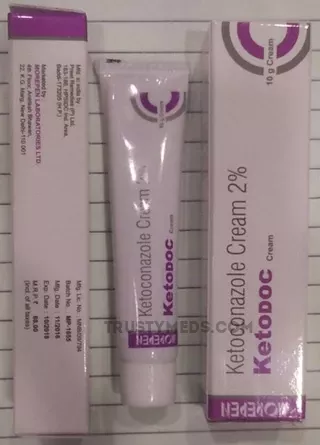
| Dosaggio del prodotto: 2% 15 g | |||
|---|---|---|---|
| Confezione (n.) | Per tubo | Prezzo | Acquista |
| 2 | €10.64 | €21.27 (0%) | 🛒 Aggiungi al carrello |
| 5 | €8.85 | €53.18 €44.24 (17%) | 🛒 Aggiungi al carrello |
| 8 | €7.02
Migliore per tubo | €85.08 €56.16 (34%) | 🛒 Aggiungi al carrello |
Prodotti simili



Ketoconazole cream is a topical antifungal medication belonging to the imidazole class. It is primarily used in dermatological practice for the treatment of superficial fungal infections caused by susceptible yeasts and dermatophytes. Its mechanism of action involves inhibition of ergosterol synthesis, a critical component of fungal cell membranes, leading to increased membrane permeability and eventual cell death. Available typically in 2% concentration, it is a mainstay in managing conditions like seborrheic dermatitis, pityriasis versicolor, and certain cutaneous candidiasis infections. Its efficacy, coupled with a generally favorable safety profile when used topically, has secured its position in both prescription and, in some regions, over-the-counter treatment arsenals.
1. Introduction: What is Ketoconazole Cream? Its Role in Modern Dermatology
When we talk about ketoconazole cream, we’re referring to a workhorse in the clinic. Fundamentally, it’s a topical formulation of the broad-spectrum antifungal agent ketoconazole. So, what is ketoconazole cream used for? Its medical applications are centered on eradicating fungal pathogens that colonize the skin’s surface. Unlike its systemic (oral) counterpart, which has significant hepatic risk limitations, the topical version delivers the drug directly to the site of infection with minimal systemic absorption, making it a much safer option for long-term or recurrent use. Its significance lies in its dual antifungal and anti-inflammatory properties, particularly against Malassezia yeast, which explains its first-line status for conditions like seborrheic dermatitis. For the patient searching for relief from persistent flaking, itching, or discolored patches, understanding what ketoconazole cream is and its proper use is the first step toward effective management.
2. Key Components and Formulation of Ketoconazole Cream
The composition of ketoconazole cream is deceptively simple but carefully engineered. The active pharmaceutical ingredient is ketoconazole, usually at a 2% concentration. The “cream” base itself is a critical, often overlooked component. It’s typically an oil-in-water emulsion, which makes it suitable for most areas of the body—it’s moisturizing enough for dry, flaky patches but not excessively occlusive. Some specialized formulations might be optimized for the scalp (often as a shampoo or foam) or for intertriginous areas (skin folds). The bioavailability of topical ketoconazole is purely local; it’s designed to penetrate the stratum corneum (the skin’s outermost layer) and reach the fungi residing in and on the skin. The formulation ensures the drug remains stable and active at the site. There’s no need for enhancers like piperine here, as the goal is not systemic absorption but effective cutaneous delivery.
3. Mechanism of Action of Ketoconazole Cream: Scientific Substantiation
So, how does ketoconazole cream work at a cellular level? Its mechanism of action is elegantly targeted. Ketoconazole is a potent inhibitor of the fungal cytochrome P450 enzyme, lanosterol 14-α-demethylase. This enzyme is crucial for converting lanosterol to ergosterol. Ergosterol is to fungal cell membranes what cholesterol is to human cell membranes—an essential structural component. By blocking its synthesis, ketoconazole causes a depletion of ergosterol and an accumulation of toxic methylated sterol precursors. The result? A compromised, leaky fungal cell membrane. This disrupts critical functions like nutrient transport and membrane-bound enzyme activity, ultimately leading to fungal cell death (fungistatic and, at higher concentrations, fungicidal effects). Furthermore, its action against Malassezia spp. also reduces the production of inflammatory free fatty acids, which explains the rapid improvement in redness and itching seen in seborrheic dermatitis. This dual effect on the body—direct antifungal kill and indirect anti-inflammatory action—is the cornerstone of its efficacy.
4. Indications for Use: What is Ketoconazole Cream Effective For?
The indications for use of ketoconazole cream are well-established through decades of clinical use and research. It is primarily effective against dermatological conditions caused or exacerbated by fungi, particularly yeasts of the genus Malassezia.
Ketoconazole Cream for Seborrheic Dermatitis
This is arguably its most prominent use. Ketoconazole cream targets the Malassezia yeast overgrowth implicated in this chronic condition. Applied to affected areas of the face (eyebrows, nasolabial folds), ears, and chest, it reduces scaling, erythema, and pruritus. Studies show it is as effective as topical corticosteroids for maintenance therapy with a better long-term safety profile.
Ketoconazole Cream for Pityriasis Versicolor (Tinea Versicolor)
This common infection, causing hypo- or hyperpigmented patches on the trunk, is directly caused by Malassezia. Topical ketoconazole is a first-line treatment, often applied as a “whole-body wash” or daily cream for 1-2 weeks, with high cure rates.
Ketoconazole Cream for Cutaneous Candidiasis
For intertrigo (inflammation in skin folds like under the breasts or groin) caused by Candida species, the cream formulation provides effective treatment. Its drying emulsion base is particularly suited for these moist environments.
Ketoconazole for Other Dermatophyte Infections (Tinea Corporis, Cruris, Pedis)
While sometimes effective, it is generally not the first-line choice for classic ringworm caused by Trichophyton or Epidermophyton. Other antifungals like terbinafine or clotrimazole may have superior efficacy for these specific organisms, but ketoconazole cream can be a useful alternative.
5. Instructions for Use: Dosage and Course of Administration
Clear instructions for use are vital for treatment success. The standard dosage for a 2% ketoconazole cream is a thin layer applied to the affected area and gently rubbed in.
| Indication | Frequency | Typical Duration | Key Notes |
|---|---|---|---|
| Seborrheic Dermatitis (acute) | 1-2 times daily | 2-4 weeks | Apply to dry, affected skin. Can be used with a topical steroid initially for severe flare-ups. |
| Seborrheic Dermatitis (maintenance) | 1-2 times per week | Long-term, as needed | Prevents recurrence. Often used intermittently. |
| Pityriasis Versicolor | Once daily | 1-2 weeks | Can also use 2% ketoconazole shampoo as a 5-minute body wash daily for 1 week. |
| Cutaneous Candidiasis | 1-2 times daily | 2 weeks | Continue for 1 week after symptoms clear to prevent relapse. Keep area dry. |
The course of administration should be completed even if symptoms improve quickly to prevent relapse. For the scalp, a 2% ketoconazole shampoo is the preferred formulation, used 2-3 times a week, left on for 3-5 minutes before rinsing. Side effects are typically mild and local, including initial burning, itching, or irritation, which often subside with continued use.
6. Contraindications and Drug Interactions of Ketoconazole Cream
Given its minimal systemic absorption, the contraindications for topical ketoconazole are few. The primary one is a known hypersensitivity to ketoconazole or any component of the cream base. It should be used with caution on broken skin or large ulcerated areas, as absorption may increase. Regarding interactions with other drugs, the risk is extremely low topically. However, it’s prudent to avoid concurrent use with other potentially hepatotoxic agents in patients with extensive application on compromised skin, though this is more a theoretical concern. The critical question, “Is it safe during pregnancy?” is categorized as FDA Category C. While systemic absorption is minimal, a risk-benefit assessment is necessary; it should only be used if clearly needed and for limited areas. It is generally considered compatible with breastfeeding when applied to small areas, avoiding the nipple.
7. Clinical Studies and Evidence Base for Ketoconazole Cream
The clinical studies supporting ketoconazole cream are robust. A landmark double-blind study published in the British Journal of Dermatology demonstrated that 2% ketoconazole cream was significantly superior to its vehicle base in treating seborrheic dermatitis, with over 70% of patients showing marked improvement or clearing after 4 weeks. For pityriasis versicolor, research in the International Journal of Dermatology has shown cure rates exceeding 80-90% with topical ketoconazole regimens. Comparative scientific evidence often pits it against topical corticosteroids. While steroids provide faster anti-inflammatory relief, ketoconazole offers superior long-term control of the underlying pathogen without the risks of skin atrophy or telangiectasia, making it the preferred maintenance agent. This effectiveness is why it’s consistently featured in dermatology treatment guidelines. Physician reviews and consensus papers routinely endorse its role, particularly for its anti-Malassezia activity.
8. Comparing Ketoconazole Cream with Similar Products and Choosing a Quality Product
When patients look for ketoconazole cream similar products or ask “which ketoconazole cream is better?”, the distinctions are often in formulation and brand. The active ingredient is standardized, so the differences lie in the cream base (which can affect spreadability, greasiness, and moisturizing properties) and whether it’s a branded or generic product.
- Vs. Other Azoles (Clotrimazole, Miconazole): These are effective for candidiasis and dermatophytes but lack the specific potency and research backing against Malassezia for seborrheic dermatitis that ketoconazole has.
- Vs. Terbinafine (an allylamine): Terbinafine cream is often more effective for dermatophyte infections (like athlete’s foot) but is not indicated for seborrheic dermatitis or pityriasis versicolor.
- Vs. Topical Corticosteroids: As mentioned, steroids are for rapid inflammation control but are not antifungal. They treat the symptom, not the cause, of seborrheic dermatitis.
- Vs. Ciclopirox Olamine: Another broad-spectrum antifungal with anti-inflammatory properties, it is a valid alternative to ketoconazole for seborrheic dermatitis, with some studies showing comparable efficacy.
How to choose: For confirmed or suspected Malassezia-related conditions, ketoconazole cream is the evidence-based frontrunner. A quality product will have a clear label stating 2% ketoconazole, be from a reputable manufacturer, and have a non-irritating base. Prescription versions may have slightly different inert ingredients than OTC ones, but the active drug is identical.
9. Frequently Asked Questions (FAQ) about Ketoconazole Cream
How long does it take for ketoconazole cream to work on seborrheic dermatitis?
Improvement in itching and scaling is often seen within 1-2 weeks of consistent daily use. Significant clearing typically takes 4 weeks. For maintenance, weekly application can prevent flares.
Can ketoconazole cream be used on the face?
Yes, it is commonly and safely used on facial areas affected by seborrheic dermatitis, such as the eyebrows, sides of the nose, and beard area. Apply a thin layer and avoid immediate contact with eyes.
Is ketoconazole cream effective for fungal acne (Malassezia folliculitis)?
Yes, this is a key indication. Ketoconazole cream, by reducing Malassezia on the skin, can effectively treat the itchy, monomorphic papules of fungal folliculitis on the chest and back. It may be used alongside ketoconazole shampoo as a wash.
Can ketoconazole cream be combined with a steroid like hydrocortisone?
Yes, this is a common and rational approach for acute, inflamed seborrheic dermatitis. The steroid reduces inflammation quickly, while ketoconazole addresses the cause. They can be applied at the same time or used separately (e.g., steroid in the morning, ketoconazole at night). Always consult a doctor for a combined regimen.
Does ketoconazole cream cause skin thinning?
No. Unlike topical corticosteroids, ketoconazole does not have an atrophogenic effect on the skin. This is a major advantage for long-term or recurrent use on sensitive areas like the face.
10. Conclusion: Validity of Ketoconazole Cream Use in Clinical Practice
In summary, the risk-benefit profile of ketoconazole cream is highly favorable for its approved indications. Its targeted mechanism of action, strong clinical evidence base, and excellent topical safety profile solidify its validity in both dermatological and general clinical practice. It remains a cornerstone treatment for seborrheic dermatitis and pityriasis versicolor, offering patients a reliable, non-steroidal option for controlling chronic conditions. For healthcare professionals and informed patients, it represents a classic example of an effective, well-understood topical therapy.
You know, I remember when we first started using the shampoo formulation extensively in the clinic for seborrheic dermatitis of the scalp—the results were so dramatic it felt like a magic bullet. But the cream… that’s where the real nuanced management happens. I had a patient, let’s call him David, a 45-year-old lawyer with persistent, red, flaky patches in his eyebrows and mustache. He’d been using a mild hydrocortisone on and off for years with temporary relief. We started him on 2% ketoconazole cream nightly. The first week, he called, a bit frustrated, saying it was maybe a little less itchy but still red. I told him to stick with it—the anti-inflammatory effect isn’t as immediate as a steroid, but it’s more fundamental. By week three, he was a different person. The scaling was gone, the redness had faded to a faint pink. We shifted to a twice-weekly maintenance plan. That was five years ago. He still pops in for an annual check, and he’ll say, “That cream you gave me, I use it maybe once a month now if I feel a tingle. It changed the game for me.” That’s the thing the studies don’t always capture—the restoration of control to the patient.
Then there was the case of Maria, a 28-year-old nurse with what she thought was stubborn back acne. It was intensely itchy, which is always my clue to think beyond typical acne. It was Malassezia folliculitis. We used ketoconazole shampoo as a body wash and the cream on the worst spots. Cleared in 10 days. She was amazed. But it’s not always perfect. We had a big internal debate about a patient with widespread, severe seborrheic dermatitis and early signs of steroid atrophy from prior treatments. Some on the team wanted to stop everything and use a potent non-steroidal like tacrolimus. I argued for a structured transition: we used a mild steroid for just 3 days to knock down the acute flare, then immediately switched to daily ketoconazole cream. The tacrolimus would have been cost-prohibitive for him. The ketoconazole protocol worked beautifully and was sustainable. The failed insight early in my career was underestimating the need for patient education—just handing over the tube without explaining the “why” and the need for consistency led to so many perceived “treatment failures.” Now, I spend the time to draw a little diagram of the yeast on the skin follicle. When they understand the mechanism, their adherence skyrockets. The longitudinal follow-up on these patients shows that the ones who become partners in their care, who understand the maintenance concept, are the ones who stay clear for good. It’s not just about the prescription; it’s about the narrative you build around it. The data is solid, but the trust you build by explaining that data? That’s what makes the treatment stick.
More info:
Popular Products
dipyridamole
Il dipiridamolo è un farmaco vasodilatatore e antiaggregante piastrinico con una storia clinica interessante, che si è ritagliato un ruolo specifico, anche se a volte dibattuto, in diverse aree della medicina vascolare. Chimicamente, è un derivato della pirimidopirimidina e la sua azione principale si esplica attraverso l’inibizione dell’uptake di adenosina da parte di eritrociti, cellule endoteliali e piastrine, portando ad un aumento dei livelli extracellulari di questo potente vasodilatatore. Inoltre, inibisce la fosfodiesterasi, aumentando l’AMP ciclico (cAMP) all’interno delle piastrine, il che inibisce l’attivazione e l’aggregazione.
Confido: Herbal Support for Premature Ejaculation and Sexual Performance Anxiety - An Evidence-Based Review
Product Description: Confido is a proprietary polyherbal formulation, traditionally categorized as a dietary supplement or nutraceutical, specifically developed to address male sexual health concerns, with a primary focus on premature ejaculation and associated anxiety. It is presented in tablet form and is composed of a blend of standardized herbal extracts known in Ayurvedic medicine for their purported nervine, adaptogenic, and aphrodisiac properties. Its role sits at the intersection of traditional phytotherapy and modern lifestyle management for sexual wellness.
Nirdosh: Эффективное Средство для Отвыкания от Курения - Обзор, Основанный на Доказательствах
Product Description: Nirdosh представляет собой инновационное медицинское устройство для отвыкания от курения, которое имитирует ручной и оральный ритуал курения без использования табака, никотина или процесса горения. Устройство функционирует за счет испарения специального растительного наполнителя на основе трав, создавая ощущение, схожее с курением, но без вредных последствий. Оно позиционируется как инструмент для управления поведенческой и психологической зависимостью, выступая мостиком к полному отказу от привычки. 1. Введение: Что такое Nirdosh? Его Роль в Современной Медицине В контексте глобальной борьбы с табакокурением, которая остается одной из ведущих причин предотвратимой смертности, поиск эффективных и безопасных вспомогательных средств выходит на первый план.
red viagra
Nel panorama degli integratori e dei dispositivi per la salute sessuale maschile, si sente spesso parlare, soprattutto online, di prodotti soprannominati “red viagra”. È fondamentale chiarire immediatamente che questo termine non si riferisce a un farmaco autorizzato, ma è un nome colloquiale e fuorviante utilizzato per commercializzare integratori alimentari, spesso di origine naturale, che promettono effetti simili a quelli del noto principio attivo farmaceutico. Questi prodotti si presentano tipicamente sotto forma di capsule o compresse di colore rosso e contengono vari estratti botanici.
Glucophage: Terapia Fondamentale per il Diabete di Tipo 2 - Monografia Evidenze-Based
Il principio attivo metformina cloridrato, commercializzato con il nome Glucophage, rappresenta da decenni la pietra angolare della terapia farmacologica per il diabete mellito di tipo 2. Appartenente alla classe delle biguanidi, il suo utilizzo si è consolidato nelle linee guida internazionali come trattamento di prima scelta, grazie a un profilo di efficacia e sicurezza ben documentato. La sua azione principale si esplica a livello epatico, dove inibisce la gluconeogenesi, riducendo così la produzione endogena di glucosio.
hair loss cream
Creme Anticaduta dei Capelli: Un Approccio Topico Innovativo per l’Alopecia Androgenetica - Revisione Basata sull’Evidenza Il concetto di una creme anticaduta dei capelli rappresenta un’evoluzione significativa nella gestione topica dell’alopecia, in particolare di quella androgenetica (AGA). Non si tratta semplicemente di uno shampoo o di un siero cosmetico, ma di una formulazione farmacologicamente attiva, spesso in forma di schiuma o gel ad alta viscosità, progettata per una penetrazione ottimale nel cuoio capelluto.
Azithromycin: Potent Antibiotic Therapy for Bacterial Infections - Evidence-Based Review
Product Description: Azee is a widely prescribed antibiotic medication belonging to the macrolide class, specifically containing the active substance azithromycin. It is commonly available in oral tablet, capsule, and suspension forms, and is recognized for its convenient once-daily dosing and broad-spectrum activity against a variety of bacterial pathogens. Its pharmacokinetic profile, characterized by extensive tissue penetration and a long half-life, allows for shorter treatment courses compared to some other antibiotics.
ethionamide
Ξεκινώντας με την περιγραφή του προϊόντος: Η εθιοναμίδη είναι ένα σύνθεση αντιβιοτικό-βιοθεραπευτικό παράγωγο της ισοναζίδης, που ανήκει στην κατηγορία των αντιμυκοβακτηριακών παραγώγων θειοαμιδών. Χρησιμοποιείται αποκλειστικά στη θεραπεία της φυματίωσης, ειδικά σε μορφές ανθεκτικές σε πολλαπλά φάρμακα (MDR-TB). Δεν είναι συμπλήρωμα διατροφής, αλλά φαρμακευτική ουσία που χορηγείται υπό αυστηρή ιατρική επίβλεψη. Η παρουσίαση αυτή ακολουθεί τη δομή ενός ενημερωτικού μονογραφικού εγγράφου για κλινικούς γιατρούς και ενημερωμένους ασθενείς. 1. Εισαγωγή: Τι είναι η Εθιοναμίδη; Ο Ρόλος της στη Σύγχρονη Αντιμυκοβακτηριακή Θεραπεία Η εθιοναμίδη είναι ένα σύνθεση αντιβιοτικό-βιοθεραπευτικό παράγωγο της ισοναζίδης, που ανήκει στην κατηγορία των αντιμυκοβακτηριακών παραγώγων θειοαμιδών.
cycrin
Il Cycrin è il nome commerciale per l’acetato di medrossiprogesterone (MPA), un progestinico sintetico derivato dal progesterone. Appartiene alla classe degli steroidi progestinici ed è strutturalmente correlato al progesterone naturale, ma modificato per aumentarne la potenza e la durata d’azione quando somministrato per via orale o parenterale. Nella pratica clinica moderna, il Cycrin svolge un ruolo poliedrico e fondamentale, andando ben oltre la semplice regolazione del ciclo mestruale. Le sue applicazioni spaziano dalla terapia ormonale sostitutiva (TOS) nella menopausa, al trattamento dell’endometriosi e dell’iperplasia endometriale, fino alla terapia palliativa in alcuni tumori ormono-sensibili, come il carcinoma della mammella e dell’endometrio in fase avanzata.