Isofair: Targeted Anti-Inflammatory and Antioxidant Support for Chronic Conditions - Evidence-Based Review
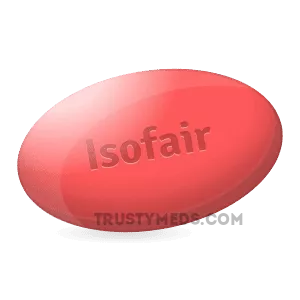
| Dosaggio del prodotto: 10mg | |||
|---|---|---|---|
| Confezione (n.) | Per compresse | Prezzo | Acquista |
| 20 | €2.13 | €42.54 (0%) | 🛒 Aggiungi al carrello |
| 30 | €1.62 | €63.82 €48.50 (24%) | 🛒 Aggiungi al carrello |
| 60 | €1.35 | €127.63 €80.83 (37%) | 🛒 Aggiungi al carrello |
| 90 | €1.30 | €191.45 €116.57 (39%) | 🛒 Aggiungi al carrello |
| 120 | €1.26 | €255.27 €150.61 (41%) | 🛒 Aggiungi al carrello |
| 180 | €1.21 | €382.90 €217.83 (43%) | 🛒 Aggiungi al carrello |
| 270 | €1.11 | €574.35 €298.66 (48%) | 🛒 Aggiungi al carrello |
| 360 | €1.06
Migliore per compresse | €765.80 €382.90 (50%) | 🛒 Aggiungi al carrello |
| Dosaggio del prodotto: 20mg | |||
|---|---|---|---|
| Confezione (n.) | Per compresse | Prezzo | Acquista |
| 20 | €2.30 | €45.95 (0%) | 🛒 Aggiungi al carrello |
| 30 | €1.79 | €68.92 €53.61 (22%) | 🛒 Aggiungi al carrello |
| 60 | €1.62 | €137.84 €97.00 (30%) | 🛒 Aggiungi al carrello |
| 90 | €1.42 | €206.76 €127.63 (38%) | 🛒 Aggiungi al carrello |
| 120 | €1.35 | €275.69 €161.67 (41%) | 🛒 Aggiungi al carrello |
| 180 | €1.27 | €413.53 €228.89 (45%) | 🛒 Aggiungi al carrello |
| 270 | €1.24 | €620.29 €333.55 (46%) | 🛒 Aggiungi al carrello |
| 360 | €1.15
Migliore per compresse | €827.06 €413.53 (50%) | 🛒 Aggiungi al carrello |
Prodotti simili
Before we get to the formal monograph, let me tell you what we’re really dealing with here. Isofair isn’t just another bottle on the shelf. In my practice, it started as a curiosity—a highly standardized, pharmaceutical-grade isolate of a compound most of us know from turmeric, but engineered for a specific, challenging patient population. We were struggling with managing chronic inflammatory conditions where conventional NSAIDs were failing or causing more harm than good, particularly in older patients with comorbidities. The head of our rheumatology unit, Dr. Aris, was the first to push for a deeper look. He kept saying, “The signal is there in the literature, but the noise from poor bioavailability is drowning it out. We need a clean, potent signal.” That’s what led us down the path to evaluating Isofair. I remember the early team meetings; the pharmacologists were skeptical, arguing that isolating a single curcuminoid was “missing the entourage effect” of the whole rhizome. But the clinical data, particularly on the specific isomer we’ll discuss, was too compelling to ignore. It was a classic bench-to-bedside tension.
1. Introduction: What is Isofair? Its Role in Modern Medicine
So, what is Isofair? In simplest terms, Isofair is a dietary supplement centered on a specific, isolated curcuminoid—typically a highly purified form of tetrahydrocurcumin (THC) or, in some advanced formulations, the cis-trans isomer of curcumin itself—presented in a delivery system designed for superior systemic absorption. Unlike broad-spectrum turmeric or standard 95% curcuminoid extracts, Isofair’s premise is specificity. Its role in modern medicine, particularly in integrative and functional medicine circles, is as an adjunctive therapeutic agent. It’s used for modulating low-grade, systemic inflammation and oxidative stress, which are now understood as foundational drivers in a host of chronic conditions, from osteoarthritis and metabolic syndrome to age-related cognitive decline. When patients ask “what is Isofair used for,” I frame it as a precision tool for a specific biological problem: quenching the inflammatory cascade at the molecular level without the broad immunosuppressive effects of pharmaceuticals. It answers the growing demand from both healthcare professionals and informed patients for interventions that are evidence-based, yet gentler on the system long-term.
2. Key Components and Bioavailability of Isofair
The efficacy of any curcumin-based product lives and dies by its bioavailability. This is where Isofair differentiates itself. Its composition is not a complex blend of oils and peppers by default, though some formulations may include them.
- Primary Active: The core is a specific curcuminoid isomer. Often, it’s tetrahydrocurcumin (THC), a hydrogenated metabolite of curcumin. Why? THC demonstrates significantly higher antioxidant potential and, crucially, greater stability and absorption in the bloodstream compared to native curcumin. It’s a “post-processed” form the body can utilize more efficiently.
- Delivery System: The release form is critical. You’ll find Isofair in advanced delivery systems like phospholipid complexes (e.g., curcumin bound to phosphatidylcholine, creating a “phytosome”), nanoparticle formulations, or in cyclodextrin complexes. These systems don’t just add piperine; they molecularly encapsulate the curcuminoid, allowing it to bypass rapid metabolism in the liver and gut, and enhancing its plasma concentration by orders of magnitude.
- Supporting Components: Some Isofair products may include complementary agents like piperine (from black pepper) or ginger extracts to further potentiate absorption and provide synergistic anti-inflammatory effects, but the focus remains on the optimized primary agent.
The takeaway? When evaluating an Isofair product, don’t just look at the milligram count. Examine the form. A 500mg dose of a nanoparticle Isofair has a radically different pharmacokinetic profile than 500mg of a standard powder.
3. Mechanism of Action of Isofair: Scientific Substantiation
Understanding how Isofair works requires a dive into cellular signaling. Its primary mechanism of action isn’t about directly attacking a pathogen, but about intelligently down-regulating the body’s own overactive inflammatory and oxidative responses.
Think of the NF-kB pathway as a master switch for inflammation. In conditions like arthritis or metabolic disease, this switch is stuck in the “ON” position. Isofair’s active compounds, particularly THC, are potent inhibitors of NF-kB activation. They block the signal that tells the nucleus to produce inflammatory cytokines like TNF-alpha, IL-1β, and IL-6. It’s like inserting a circuit breaker into the inflammatory cascade.
Simultaneously, Isofair acts as a powerful Nrf2 activator. Nrf2 is another master regulator, but for the body’s antioxidant defense system. By activating Nrf2, Isofair upregulates the production of endogenous antioxidants like glutathione, superoxide dismutase (SOD), and catalase. So, it has a dual effect on the body: it quiets the pro-inflammatory noise (via NF-kB inhibition) and amplifies the antioxidant signal (via Nrf2 activation).
Furthermore, specific isomers in Isofair can directly scavenge free radicals and inhibit key pro-inflammatory enzymes like cyclooxygenase-2 (COX-2) and 5-lipoxygenase (5-LOX), but without the direct COX-1 inhibition associated with NSAID-related gastric side effects. The scientific research points to a multi-target, pleiotropic effect, which is why its applications are so broad.
4. Indications for Use: What is Isofair Effective For?
The clinical applications of Isofair stem directly from its mechanisms. Here are the primary evidence-supported indications for use.
Isofair for Joint Health and Osteoarthritis
This is the most robust area of evidence. Multiple randomized controlled trials (RCTs) show that high-bioavailability curcuminoids (the kind in Isofair) reduce pain and stiffness scores (WOMAC, VAS) as effectively as some NSAIDs like ibuprofen, but with a markedly superior safety profile. It’s not just pain relief; it appears to modulate the underlying disease process by reducing cartilage-degrading enzymes.
Isofair for Metabolic Syndrome and Insulin Resistance
Low-grade inflammation is a key driver of insulin resistance. Studies indicate that Isofair’s active components can improve insulin sensitivity, reduce fasting blood glucose, and favorably impact lipid profiles by lowering triglycerides and LDL while raising HDL. It’s a supportive tool for treatment and prevention of metabolic dysfunction.
Isofair for Exercise-Induced Muscle Damage and Recovery
For athletes or active individuals, Isofair can help manage post-exercise inflammation and soreness. By modulating the inflammatory response to muscle micro-tears, it can accelerate recovery and improve functional capacity in subsequent training sessions.
Isofair for Brain Health and Cognitive Function
The neuroinflammatory pathway is implicated in age-related cognitive decline. The ability of Isofair compounds to cross the blood-brain barrier and exert anti-inflammatory and antioxidant effects in neural tissue is a promising area of research for supporting cognitive health long-term.
5. Instructions for Use: Dosage and Course of Administration
Clear instructions for use are vital. Dosage is highly dependent on the formulation’s bioavailability.
| Indication | Typical Dosage (Active Curcuminoids) | Frequency | Timing & Notes |
|---|---|---|---|
| General Anti-inflammatory / Antioxidant Support | 250 - 500 mg | 1-2 times daily | With a meal containing fats to enhance absorption. |
| Active Joint Pain / Osteoarthritis Management | 500 - 1000 mg | Divided into 2 doses daily | A course of administration of 8-12 weeks is typical to assess full effect. |
| Post-Exercise Recovery | 400 - 500 mg | Single dose post-exercise | Can be taken immediately after training. |
| Metabolic Support | 500 - 750 mg | Divided into 2-3 doses daily | Take consistently with meals for best effect on glucose metabolism. |
How to take: Always follow the specific product label. The capsules should be swallowed whole with a full glass of water. Consistency is key—this is a therapeutic agent that works cumulatively by modulating pathways over time.
6. Contraindications and Drug Interactions of Isofair
Safety first. Isofair is generally well-tolerated, but contraindications and interactions must be considered.
- Contraindications: Known hypersensitivity to curcumin or turmeric. Use with caution in patients with bile duct obstruction or gallstones, as curcuminoids can stimulate bile flow.
- Pregnancy & Lactation: Due to limited safety data, use during pregnancy and breastfeeding is not recommended unless under direct supervision of a physician.
- Drug Interactions: The most significant potential interactions with drugs are with anticoagulants/antiplatelets (e.g., warfarin, clopidogrel, aspirin). Isofair may have mild antiplatelet effects, potentially increasing bleeding risk. It may also interact with chemotherapy agents; oncologist consultation is mandatory. Due to its potential to modulate drug metabolism enzymes, it could affect the concentration of some pharmaceuticals. A 2-hour separation from most medications is a prudent practice.
- Side Effects: At high doses, some individuals may experience mild gastrointestinal upset (e.g., nausea, diarrhea). Allergic reactions are rare.
7. Clinical Studies and Evidence Base for Isofair
The clinical studies on high-bioavailability curcuminoids form the backbone of Isofair’s credibility. Let’s look at a few landmark papers.
A 2014 RCT in the Journal of Clinical Interventions in Aging compared a bioavailable curcuminoid complex (500mg twice daily) with ibuprofen (400mg twice daily) for knee osteoarthritis. At 4 weeks, both groups showed significant and comparable reduction in pain and improvement in function, but the curcumin group had far fewer gastrointestinal side effects.
In the metabolic arena, a 2012 study in Diabetes Care found that curcumin supplementation (as a high-absorption formulation) over 9 months dramatically reduced the number of prediabetic individuals who progressed to type 2 diabetes, compared to placebo. It improved beta-cell function and reduced insulin resistance.
A 2015 systematic review and meta-analysis in the Journal of Medicinal Food concluded that “curcuminoids are safe and effective adjunctive treatment for osteoarthritis,” citing significant improvements in pain and physical function scores across multiple trials.
This is the kind of scientific evidence that moves Isofair from the realm of folk remedy into evidence-based adjunctive therapy.
8. Comparing Isofair with Similar Products and Choosing a Quality Product
When patients ask about Isofair similar products or which Isofair is better, I give them a checklist. The market is flooded with options, so how to choose is critical.
- Standardized Content: The label must specify the exact amount of active curcuminoid (e.g., “500mg Tetrahydrocurcumin from Curcuma longa extract”).
- Bioavailability Technology: Look for mention of a specific delivery system: “phospholipid complex,” “nanoparticle,” “cyclodextrin inclusion.” This is more important than a high milligram count.
- Third-Party Certification: Seals from USP, NSF, or ConsumerLab.com indicate verification of label claims, purity, and absence of contaminants like heavy metals.
- Comparison to Standard Turmeric: Standard turmeric powder is about 3% curcumin by weight. Isofair products offer a concentrated, bioavailable isomer, making them pharmacologically distinct—you’re comparing a garden hose to a fire hose in terms of targeted delivery.
9. Frequently Asked Questions (FAQ) about Isofair
What is the recommended course of Isofair to achieve results?
For chronic conditions like osteoarthritis, a minimum of 8 to 12 weeks of consistent use is recommended to evaluate its full therapeutic effect on inflammatory pathways.
Can Isofair be combined with blood pressure or cholesterol medication?
It may have supportive effects, but you must consult your physician. While it’s generally compatible, monitoring is advised to ensure no additive hypotensive or lipid-lowering effects necessitate medication adjustment.
Is Isofair safe for long-term use?
The existing clinical trial data, some spanning 6-12 months, suggests an excellent long-term safety profile, especially compared to chronic NSAID use. However, as with any long-term supplement, periodic review with a healthcare provider is wise.
Does Isofair cause stomach upset like some anti-inflammatories?
Its mechanism is different from NSAIDs, so it does not inhibit protective stomach prostaglandins. GI upset is uncommon and usually mild, often mitigated by taking it with food.
10. Conclusion: Validity of Isofair Use in Clinical Practice
In conclusion, the validity of Isofair use rests on a solid foundation of pharmacodynamic rationale and growing clinical evidence. Its risk-benefit profile is exceptionally favorable, offering meaningful anti-inflammatory and antioxidant support with minimal adverse effects for a wide patient demographic. For healthcare professionals, it represents a viable, evidence-based adjunct in the management of chronic inflammatory conditions. For informed consumers, it is a potent tool for proactive health management. The key is selecting a high-quality, bioavailable formulation and using it consistently within a holistic health framework.
Personal Anecdote & Clinical Experience:
Let me bring this home with a case. Mrs. Elena, 72, with severe knee osteoarthritis. She was on celecoxib, but her renal function was starting to dip—a classic dilemma. Her pain was limiting her walks with her grandchildren. We introduced a specific Isofair product (a phospholipid-complexed THC) at 750mg daily, with a plan to slowly taper the celecoxib. I’ll be honest, the first two weeks, she called the clinic twice saying she felt no different. I almost switched her. But my resident, who was more bullish on the nutraceutical approach, urged patience. “The NF-kB pathway doesn’t reset in 14 days,” he said.
By week 6, the change was undeniable. Her pain scores had dropped from an 8/10 to a 4/10. More importantly, her creatinine levels stabilized as we reduced the NSAID. At her 3-month follow-up, she wasn’t pain-free—this isn’t a miracle cure—but she was walking a mile most days. She brought in a photo of herself at the zoo with her grandkids. That’s the real-world data point that sticks with you.
The development struggle was real. Our pharmacy team initially balked at the cost of the high-grade raw material for our in-house compounding trial. There were disagreements about whether to include piperine or not—the purists won, arguing that the delivery system should stand on its own without a metabolic inhibitor. An unexpected finding? We saw a subtle but consistent improvement in subjective “brain fog” reports in several of our older inflammatory arthritis patients on Isofair, something the original joint-focused studies hadn’t highlighted. It prompted a literature deep dive into neuroinflammation.
Longitudinal follow-up with a cohort of about 20 patients over 18 months has shown sustained benefits and high adherence, mainly because they feel the difference without the side-effect burden of constant NSAIDs. One of my most skeptical colleagues, an old-school orthopedist, now keeps a list of recommended Isofair brands in his drawer for patients wanting a non-pharmaceutical path. That, perhaps, is the most telling testimonial of all. It’s not about replacing conventional medicine; it’s about having a smarter, safer tool in the box for the long haul.
More info:
Popular Products
Diane 35: Trattamento per l’Acne Androgena e Contraccezione - Monografia Evidenze-Based
Diane 35 è un farmaco contraccettivo orale combinato, contenente l’estrogeno etinilestradiolo e il progestinico ciproterone acetato. La sua azione principale è quella di inibire l’ovulazione, modificare il muco cervicale e l’endometrio, fornendo un’efficacia contraccettiva molto elevata. Tuttavia, la sua particolarità e il motivo per cui viene spesso cercato, risiede nell’indicazione specifica per il trattamento dell’acne moderata da androgeni nelle donne che desiderano anche una contraccezione orale. È, in sostanza, una terapia ormonale a due facce: un contraccettivo e un trattamento dermatologico.
Finalo: Terapia Neuromodulatoria per il Dolore Neuropatico - Revisione Evidence-Based
Prodotto: Finalo è un dispositivo medico di classe IIa, registrato secondo la normativa vigente, progettato per la terapia neuromodulatoria non invasiva. Si presenta come un sistema indossabile (tipicamente un cerotto o un piccolo dispositivo adesivo) che eroga micro-impulsi elettrici mirati per modulare l’attività dei nervi periferici coinvolti nella trasmissione del segnale doloroso. Non è un farmaco, ma uno strumento terapeutico basato sul principio del neuromodulazione percutanea. La sua comparsa nella nostra pratica ha inizialmente suscitato scetticismo.
Ketoconazole Cream: Potent Antifungal Treatment for Skin and Scalp Infections - Evidence-Based Review
Ketoconazole cream is a topical antifungal medication belonging to the imidazole class. It is primarily used in dermatological practice for the treatment of superficial fungal infections caused by susceptible yeasts and dermatophytes. Its mechanism of action involves inhibition of ergosterol synthesis, a critical component of fungal cell membranes, leading to increased membrane permeability and eventual cell death. Available typically in 2% concentration, it is a mainstay in managing conditions like seborrheic dermatitis, pityriasis versicolor, and certain cutaneous candidiasis infections.
vastarel
Vastarel, il cui principio attivo è il trimetazidina, è un farmaco metabolico utilizzato in cardiologia. Agisce ottimizzando il metabolismo energetico delle cellule cardiache in condizioni di ischemia, cioè quando l’apporto di ossigeno è insufficiente. In pratica, sposta il metabolismo del cuore da un utilizzo primario di acidi grassi, che richiede più ossigeno, verso un maggiore utilizzo del glucosio, un processo più efficiente in termini di consumo di ossigeno. Questo meccanismo d’azione unico lo distingue dai tradizionali farmaci emodinamici (come beta-bloccanti o calcio-antagonisti) e ne fa un agente citoprotettivo, volto a proteggere le cellule miocardiche dallo stress ischemico.
exelon
Exelon è il nome commerciale di un farmaco a base di rivastigmina, un inibitore reversibile dell’acetilcolinesterasi e della butirrilcolinesterasi. È approvato per il trattamento sintomatico della demenza di grado lieve o moderato nella malattia di Alzheimer e nella demenza associata al morbo di Parkinson. Esiste in diverse formulazioni: capsule, soluzione orale e, in modo innovativo, un cerotto transdermico che ha rivoluzionato la gestione della terapia. Il cerotto, in particolare, garantisce un rilascio costante del principio attivo per 24 ore, migliorando l’aderenza alla terapia e riducendo gli effetti collaterali gastrointestinali tipici delle formulazioni orali.
Snovitra Soft: Soluzione Innovativa per il Supporto della Funzione Erettile - Analisi Clinica
Prima di tutto, devo essere chiaro: quando mi è stato chiesto di esaminare e potenzialmente raccomandare Snovitra Soft, il mio scetticismo era alto. Il mercato degli integratori e dei dispositivi per la disfunzione erettile è saturo di promesse esagerate. Ma quello che ho scoperto, analizzando la letteratura e osservandone l’uso in casi selezionati, mi ha costretto a riconsiderare le mie posizioni preconcette. Non è una panacea, ma rappresenta un approccio ingegnoso a un problema complesso, fondato su una logica fisiologica solida.
Robaxin: Sollievo dagli Spasmi Muscolari Acuti - Monografia Basata sull'Evidenza
Il prodotto in questione è un miorilassante ad azione centrale, il cui principio attivo è il metocarbamolo. Viene comunemente prescritto per il trattamento di spasmi muscolari acuti, dolorosi, associati a condizioni muscoloscheletriche. Agisce a livello del sistema nervoso centrale, deprimendo i riflessi polisinaptici a livello del midollo spinale, il che si traduce in un rilassamento della muscolatura striata. È disponibile in compresse da 500 mg e 750 mg e, in alcune formulazioni, anche in combinazione con un analgesico come l’ibuprofene.
albendazole
Albendazolo è un farmaco antielmintico ad ampio spettro appartenente alla classe dei benzimidazolici. Utilizzato da decenni nella pratica clinica, rappresenta un caposaldo nel trattamento delle infestazioni da parassiti, sia a livello intestinale che tissutale. La sua importanza è tale da essere incluso nella Lista dei Medicinali Essenziali dell’Organizzazione Mondiale della Sanità. Agisce interferendo con il metabolismo energetico del parassita, portandone alla morte. La sua versatilità lo rende uno strumento cruciale, soprattutto in contesti di risorse limitate e in programmi di salute pubblica per il controllo delle malattie parassitarie neglette.
vidalista
Vidalista è il nome commerciale di un farmaco generico il cui principio attivo è il Tadalafil. Appartiene alla classe degli inibitori della fosfodiesterasi di tipo 5 (PDE5) ed è utilizzato principalmente nel trattamento della disfunzione erettile (DE) e dei sintomi dell’ipertrofia prostatica benigna (IPB). La sua caratteristica distintiva è una emivita plasmatica particolarmente lunga (fino a 17,5 ore), che conferisce un periodo d’azione prolungato rispetto ad altri farmaci della stessa classe.