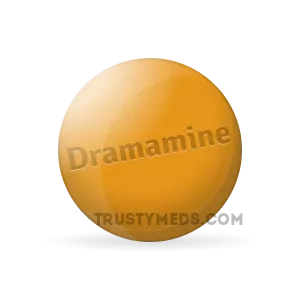
Dramamine: Effective Prevention and Relief for Motion Sickness - Evidence-Based Review
| Dosaggio del prodotto: 25 mg | |||
|---|---|---|---|
| Confezione (n.) | Per compresse | Prezzo | Acquista |
| 8 | €1.06 | €8.51 (0%) | 🛒 Aggiungi al carrello |
| 24 | €0.74 | €25.53 €17.87 (30%) | 🛒 Aggiungi al carrello |
| 32 | €0.61 | €34.04 €19.57 (42%) | 🛒 Aggiungi al carrello |
| 80 | €0.50 | €85.10 €39.99 (53%) | 🛒 Aggiungi al carrello |
| 120 | €0.44 | €127.64 €52.76 (59%) | 🛒 Aggiungi al carrello |
| 168 | €0.42
Migliore per compresse | €178.70 €70.63 (60%) | 🛒 Aggiungi al carrello |
| Dosaggio del prodotto: 50mg | |||
|---|---|---|---|
| Confezione (n.) | Per compresse | Prezzo | Acquista |
| 60 | €0.71 | €42.55 (0%) | 🛒 Aggiungi al carrello |
| 90 | €0.61 | €63.82 €55.31 (13%) | 🛒 Aggiungi al carrello |
| 120 | €0.57 | €85.10 €68.93 (19%) | 🛒 Aggiungi al carrello |
| 180 | €0.53 | €127.64 €96.16 (25%) | 🛒 Aggiungi al carrello |
| 270 | €0.50 | €191.46 €134.45 (30%) | 🛒 Aggiungi al carrello |
| 360 | €0.49
Migliore per compresse | €255.29 €176.15 (31%) | 🛒 Aggiungi al carrello |
Sinonimi
| |||



Product Description: This monograph details the non-prescription medication dimenhydrinate, widely recognized under the brand name Dramamine. It is classified as an antihistamine and anticholinergic agent, primarily indicated for the prevention and treatment of nausea, vomiting, and dizziness associated with motion sickness. Available in various oral formulations, including standard and less-drowsy versions, it functions by suppressing signals in the brain’s vestibular system and vomiting center.
1. Introduction: What is Dramamine? Its Role in Modern Therapy
When we talk about Dramamine, we’re referring to the brand name for the active pharmaceutical ingredient dimenhydrinate. For decades, it has been a cornerstone in the prophylactic and acute management of motion sickness, a condition that, while not life-threatening, can severely degrade quality of life during travel. Its significance lies in its accessibility as an over-the-counter (OTC) medication, providing the public with a first-line defense against the nausea, vomiting, pallor, and cold sweats triggered by conflicting sensory inputs during car, air, or sea travel. Fundamentally, Dramamine serves as a neurological dampener, calming the hyperstimulation of the vestibular-ocular pathway. It’s important for users and clinicians to understand that while highly effective, it is a symptomatic treatment, not a cure for the underlying sensory mismatch.
2. Key Components and Bioavailability of Dramamine
The core of Dramamine’s efficacy is its chemical composition. Dimenhydrinate is not a single molecule but a 1:1 salt combination of two well-characterized compounds:
- Diphenhydramine: A first-generation ethanolamine-class H1-antihistamine, which is the primary active agent responsible for the central antiemetic and sedative effects.
- 8-Chlorotheophylline: A chlorinated derivative of theophylline, a mild central nervous system stimulant, included theoretically to counteract the sedative effects of diphenhydramine. In practice, the stimulant effect is often minimal, and drowsiness remains the predominant side effect.
Regarding bioavailability, standard Dramamine tablets are designed for systemic absorption through the gastrointestinal tract. The key consideration is timing. Because it must be absorbed and achieve sufficient plasma concentration before the onset of nausea, its bioavailability is functionally linked to proper prophylactic dosing. “Less Drowsy” formulations typically replace diphenhydramine with meclizine, another antihistamine with a longer half-life and purportedly less sedating effects, though individual responses vary widely.
3. Mechanism of Action of Dramamine: Scientific Substantiation
So, how does Dramamine actually work? The mechanism of action is rooted in its antagonism of histamine H1 receptors and muscarinic acetylcholine receptors in the brain. Motion sickness is believed to arise from a neural mismatch between visual input, vestibular (inner ear) sensation, and proprioceptive signals. This conflict is processed in the brainstem, particularly in the vestibular nuclei and the chemoreceptor trigger zone (CTZ), ultimately activating the vomiting center.
Dramamine (dimenhydrinate) crosses the blood-brain barrier and acts as a central nervous system depressant. By blocking H1 and muscarinic receptors in these key areas, it:
- Dampens vestibular neuron activity, reducing the firing rate of nerves that relay disruptive motion signals from the inner ear.
- Raises the excitation threshold of the vomiting center, making it less likely to be triggered by conflicting sensory input.
- Possesses anticholinergic effects that contribute to the reduction of gastric motility and secretory activity, though this plays a secondary role.
Think of it as applying a neurological “noise-canceling” filter to the confusing motion signals, preventing them from reaching the intensity required to provoke nausea and vomiting.
4. Indications for Use: What is Dramamine Effective For?
The primary and well-established indications for use for Dramamine revolve around motion-related disorders. Its use should be considered prophylactic (preventative) rather than curative for best results.
Dramamine for Motion Sickness Prevention
This is the flagship indication. It is most effective when taken 30 minutes to 1 hour before exposure to triggering motion (e.g., before boarding a plane or ship). It is recommended for individuals with a known susceptibility to motion sickness.
Dramamine for Acute Motion Sickness
It can be used to treat symptoms after they have begun, though its efficacy is reduced once severe nausea or vomiting has commenced, as gastric absorption may be impaired.
Dramamine for Vertigo and Dizziness
While not a first-line prescription treatment for chronic vestibular disorders like Ménière’s disease, Dramamine is sometimes used off-label for the temporary relief of vertigo symptoms due to its central dampening effect. However, its sedating properties can hinder vestibular rehabilitation.
Dramamine for Nausea of Other Etiologies
Clinically, it is sometimes used empirically for nausea from various causes (e.g., post-operative, viral gastroenteritis), though other antiemetics are often more targeted and appropriate.
5. Instructions for Use: Dosage and Course of Administration
Adherence to dosage guidelines is critical for safety and efficacy. The following table provides a general guide. Always read the specific product label and consult a healthcare provider, especially for children and the elderly.
| Indication & Demographic | Standard Dose (Dimenhydrinate) | Frequency | Key Administration Notes |
|---|---|---|---|
| Adults & Adolescents (12+ yrs) | 50-100 mg | Every 4-6 hours as needed. Do not exceed 400 mg in 24 hours. | For prevention, take first dose 30-60 min before travel. Take with food or milk if GI upset occurs. |
| Children (6-12 yrs) | 25-50 mg | Every 6-8 hours as needed. Do not exceed 150 mg in 24 hours. | Use only under adult supervision. Pediatric-specific formulations are available. |
| Children (2-5 yrs) | Consult a physician. | Dosing is weight-based and must be determined by a doctor. | Not recommended for children under 2 years without direct medical advice. |
| Prevention of Motion Sickness | 50-100 mg (Adults) | 1st dose 30-60 min pre-travel, repeat every 4-6 hours if journey continues. | Consistency is key; taking it after severe nausea starts is less effective. |
Course of Administration: It is intended for short-term, intermittent use related to travel episodes. Long-term daily use is not indicated and increases the risk of side effects and tolerance.
6. Contraindications and Drug Interactions with Dramamine
A thorough understanding of contraindications and potential drug interactions is non-negotiable for safe use.
Contraindications:
- Hypersensitivity to dimenhydrinate, diphenhydramine, or other antihistamines of similar structure.
- Concomitant use with monoamine oxidase inhibitors (MAOIs), due to risk of exaggerated anticholinergic effects.
- Narrow-angle glaucoma, due to anticholinergic effects that can increase intraocular pressure.
- Severe prostate enlargement (BPH) or urinary retention.
- Severe respiratory conditions like asthma (can thicken secretions).
Major Drug Interactions:
- CNS Depressants: Potentiates sedation with alcohol, benzodiazepines, opioids, sedative antidepressants, and other sleep aids. This combination can be dangerous for driving or operating machinery.
- Anticholinergic Agents: Additive effects with drugs like tricyclic antidepressants, antipsychotics, and medications for overactive bladder, increasing risk of dry mouth, constipation, urinary retention, and confusion.
- Stimulants: The 8-chlorotheophylline component may theoretically interact, but the clinical significance is minimal.
Special Populations:
- Pregnancy & Lactation: Category B. Use only if clearly needed and under medical supervision, as it crosses the placenta and into breast milk.
- Elderly: Increased sensitivity to anticholinergic effects (confusion, dizziness, dry mouth, constipation). Lower doses are advised; risk of falls is a serious concern.
7. Clinical Studies and Evidence Base for Dramamine
The clinical studies supporting Dramamine are historical but foundational. Early controlled trials in the mid-20th century established its superiority over placebo in preventing motion sickness in naval cadets and in laboratory settings using rotating chairs. For instance, a classic study published in JAMA demonstrated a significant reduction in the incidence of nausea and vomiting in subjects exposed to provocative motion after pre-treatment with dimenhydrinate.
More recent scientific evidence often focuses on comparative effectiveness. Studies have shown that while Dramamine (dimenhydrinate) is effective, prescription transdermal scopolamine patches may provide longer-lasting protection with fewer systemic side effects for some individuals. However, Dramamine retains its place due to its OTC status, rapid onset when taken correctly, and lower cost. Research also confirms the individual variability in response; some patients report complete relief, while others find the drowsiness prohibitive. The evidence solidly supports its role as a proven, accessible prophylactic agent within its defined use case.
8. Comparing Dramamine with Similar Products and Choosing a Quality Product
When patients ask about Dramamine similar products or which option is better, the discussion hinges on active ingredient, duration, and side-effect profile.
- Dramamine (Dimenhydrinate) vs. Meclizine (e.g., Bonine, Dramamine Less Drowsy): Meclizine has a longer half-life (~6-24 hours), allowing once-daily dosing for travel. It is often associated with less drowsiness, making it a preferred choice for many for daytime travel. However, dimenhydrinate may have a slightly faster onset.
- Dramamine vs. Scopolamine Patch: The scopolamine patch (prescription) provides 72 hours of continuous delivery via the skin. It is highly effective and avoids GI absorption issues. However, it can cause blurred vision, dry mouth, and is contraindicated for those with glaucoma. It’s for longer journeys.
- Dramamine vs. Ginger or Acupressure Bands: These are non-pharmacological options with minimal side effects. Evidence for ginger is moderate; it may be suitable for mild cases. Acupressure bands work for some individuals through unclear mechanisms.
How to choose a quality product: For Dramamine, choose established brands from reputable manufacturers to ensure consistent dosing. Check the active ingredient label clearly: “dimenhydrinate” for original, “meclizine” for “less drowsy.” For generic store brands, ensure USP certification. Your choice should be guided by: 1) Journey length, 2) Your need to remain alert, and 3) Your personal history with side effects.
9. Frequently Asked Questions (FAQ) about Dramamine
What is the recommended course of Dramamine to achieve results?
For motion sickness, it is a short-course therapy. Take the first dose 30-60 minutes before travel, and repeat only as needed every 4-6 hours during continued motion exposure. Do not use continuously for more than a few days without consulting a doctor.
Can Dramamine be combined with alcohol?
Absolutely not. Both are CNS depressants. Combining them significantly increases the risk of profound sedation, dizziness, impaired motor control, and dangerous accidents. It also worsens dehydration.
Is Dramamine safe for children?
It can be used in children over 2 years of age, but only with careful, weight-based dosing as directed by a pediatrician or per the product’s pediatric label. Never give adult formulations to children without precise dosage conversion.
Why does Dramamine make me so drowsy?
Drowsiness is its most common side effect because the diphenhydramine component readily crosses the blood-brain barrier and blocks histamine receptors in the brain areas that regulate wakefulness. The “less drowsy” formulations use a different antihistamine (meclizine) that is more selective for the vestibular system.
Can I take Dramamine if I am on antidepressants?
You must consult your doctor or pharmacist. Significant interactions are possible, especially with older tricyclic antidepressants (additive anticholinergic effects) or with sedating antidepressants like mirtazapine (additive drowsiness). SSRIs have a lower risk of interaction but professional advice is essential.
10. Conclusion: Validity of Dramamine Use in Clinical Practice
In conclusion, Dramamine (dimenhydrinate) maintains a valid and well-defined role in the clinical and self-care toolkit for motion sickness. Its risk-benefit profile is favorable when used appropriately: short-term, prophylactically, by individuals without contraindications, and with a clear understanding of its sedative potential. The evidence-based data supports its efficacy as a central vestibular suppressant. For the informed consumer or the healthcare professional recommending an OTC option, Dramamine represents a classic, effective solution. The final recommendation is to prioritize prevention through correct timing, choose the formulation (original vs. less drowsy) that aligns with your activity requirements, and always err on the side of caution regarding interactions and contraindications.
Personal Anecdote & Clinical Observations:
You know, we all read the monographs and the tidy tables of dosages. But the real story of Dramamine plays out in the clinic, and sometimes in my own car. I remember a specific case – Mrs. Alvarez, a vibrant 68-year-old determined to take her grandkids on a cruise. She’d had a terrible experience years prior, spent the whole trip in her cabin. She was adamant about taking “the seasick pill” but was terrified of feeling “doped up.”
We had a long chat. The standard advice was 50mg an hour before. But looking at her, and knowing the potential for anticholinergic confusion in older adults – even though she was sharp as a tack – gave me pause. There was a bit of internal debate. My resident was gung-ho for the standard dose. I hesitated. We settled on a compromise: a test run. I had her take a half-dose (25mg) at home, on a day she didn’t drive, just to see how her system reacted. It wasn’t textbook, but it was prudent.
Turns out, she was exquisitely sensitive. That half-dose made her pleasantly relaxed but too sleepy for her liking. So we switched gears entirely to meclizine, the “less drowsy” cousin. She took it the morning of the cruise, and the postcard I got from the Bahamas said it all: “Didn’t miss a minute. Thank you for listening.”
That’s the thing they don’t always teach – the bioavailability isn’t just about the molecule; it’s about the individual’s neurology and age. Another case: young Mark, a college rower getting sick during training on choppy water. The team doc just said “take Dramamine.” But he was taking it as he felt sick, which was useless. The failure was in the instruction, not the drug. We fixed the timing, and it worked like a charm. But then he tried to combine it with a strong NSAID for shoulder pain and ended up with heartburn so bad he thought it was an ulcer. A classic overlooked interaction – both can irritate the gastric mucosa.
The development of these OTC options must have been fraught. I can imagine the pharmacologists arguing: add the stimulant to counter the sedation! But in practice, the theophylline component feels almost like a historical footnote. The drowsiness wins out most of the time. That’s the unexpected finding in real-world use – the promised “counteraction” is largely theoretical for many patients.
We see the longitudinal follow-up in patients like these. Mrs. Alvarez now uses meclizine sparingly but effectively for long car trips. Mark, the rower, learned to pre-medicate and now swears by it, but he’s a vocal advocate for reading the fine print on drug interactions. Their testimonials aren’t just about efficacy; they’re about mastering the logistics of self-care. It’s not a perfect drug. It can be a blunt instrument. But when applied with careful, personalized strategy – considering age, comorbidities, timing, and the patient’s own fear of side effects – it transitions from a simple pill to a powerful tool for reclaiming comfort and confidence during travel. That’s the real mechanism of action, in my view: it provides control. And sometimes, that’s the most therapeutic effect of all.
More info:
Popular Products
vancomycin
Vancomycin è un glicopeptide antibiotico di origine naturale, prodotto dalla fermentazione di Amycolatopsis orientalis. Nella pratica clinica moderna, rappresenta un pilastro terapeutico fondamentale, spesso considerato un farmaco di “ultima risorsa” per il trattamento di infezioni gravi e potenzialmente letali causate da batteri Gram-positivi resistenti ad altri antibiotici. La sua importanza è cresciuta esponenzialmente con la diffusione globale di ceppi batterici multi-resistenti, come lo Staphylococcus aureus resistente alla meticillina (MRSA) e gli enterococchi resistenti alla vancomicina (VRE), sebbene per questi ultimi l’opzione terapeutica primaria non sia più la vancomicina standard.
tadalista
Il Tadalista è un farmaco generico contenente il principio attivo Tadalafil, un inibitore della fosfodiesterasi di tipo 5 (PDE5), utilizzato principalmente nel trattamento della disfunzione erettile (DE) e dei sintomi dell’ipertrofia prostatica benigna (IPB). Si presenta in diverse formulazioni (compresse orali a rilascio immediato e a rilascio prolungato) e dosaggi (2.5 mg, 5 mg, 10 mg, 20 mg), permettendo una terapia su misura. Il suo ruolo nella medicina moderna è consolidato, offrendo una soluzione efficace e ben tollerata per condizioni che impattano significativamente sulla qualità della vita.
Clindamycine Gel: Effectieve Behandeling voor Inflammatoire Acne - Evidence-Based Review
Clindamycin gel is een topisch antibioticum dat behoort tot de lincosamideklasse. Het wordt voornamelijk voorgeschreven voor de behandeling van inflammatoire acne vulgaris, waarbij het de groei van bacteriën op de huid, met name Cutibacterium acnes (voorheen Propionibacterium acnes), remt en ontstekingen vermindert. Het is een heldere of lichtgele gel, meestal geformuleerd met 1% clindamycinefosfaat, en wordt beschouwd als een eerstelijnsbehandeling voor milde tot matige papulopustulaire acne. In tegenstelling tot orale antibiotica, minimaliseert de plaatselijke toediening systemische bijwerkingen en het risico op antibioticaresistentie in de darmflora, hoatz het verstandig gebruik vereist om lokale resistentie te voorkomen.
Mentat: Cognitive Support and Neuroprotection - An Evidence-Based Review
Product Description: Mentat is a comprehensive herbal formulation developed as a dietary supplement to support cognitive function, memory, and overall brain health. It represents a modern application of Ayurvedic principles, combining a wide spectrum of standardized herbal extracts known in traditional medicine for their neuroprotective and nootropic properties. It is positioned as a non-pharmacological adjunct for managing conditions associated with cognitive decline and stress. 1. Introduction: What is Mentat? Its Role in Modern Integrative Medicine So, you’ve had patients asking about Mentat.
Levoflox: Τοπική Υποστήριξη κατά Βακτηριακών Λοιμώξεων – Μια Βάση Φυτικών Συστατικών
Προϊόν: Levoflox (Λεβοφλοξασίνη) σε μορφή διατροφικού συμπληρώματος/ιατρικής συσκευής για τοπικής εφαρμογής (π.χ., σπρέι, αλοιφή) με σκοπό την ενίσχυση της τοπικής άμυνας κατά βακτηριακών λοιμώξεων σε δέρμα και βλεννογόνους, με βάση φυτικά συστατικά που μιμούνται τη δράση της φθοροκινολόνης. Προσωπική Ανέκδοτα & Κλινική Εμπειρία: Θυμάμαι ακόμα τη Μαρία, 68 ετών, με χρόνιο διαβήτη τύπου 2 και ένα επαναλαμβανόμενο πρόβλημα με μικροτραυματισμούς στα πόδια που εύκολα επέκεινταν. Ερχόταν συχνά στο ιατρείο με ελαφριές μολύνσεις γύρω από τα νύχια των ποδιών.
silvitra
Il prodotto in questione, che chiameremo Silvitra per questo documento, rappresenta un approccio interessante nel panorama degli integratori alimentari volti a supportare la salute vascolare e la funzione erettile negli uomini. Non è un farmaco, ma piuttosto una combinazione sinergica di principi attivi naturali, aminoacidi e cofattori vitaminici, formulata per agire su più fronti fisiologici. La sua comparsa sul mercato risponde a una domanda crescente di soluzioni che vadano oltre il semplice trattamento sintomatico, puntando invece a modulare i meccanismi sottostanti.
provera
Πριν από περίπου δύο χρόνια, ένας ασθενής, ο κύριος Ανδρέας, 58 ετών, ήρθε στο ιατρείο μου με μια ιστορία που την ακούς συχνά αλλά πάντα σε ανησυχεί: ανεξήγητες κράμπες στην κοιλιά και μια αίσθηση πλήρους που δεν φεύγει, ειδικά μετά το φαγητό. Ο υπέρηχος έδειξε πολλαπλά μυώματα στη μήτρα, μερικά από τα οποία είχαν φτάσει σε αξιοσημείωτο μέγεθος. Η σύζυγός του, που τον συνόδευε, ήταν πιο ανήσυχη από αυτόν. “Δεν θέλει χειρουργείο, γιατρό,” μου είπε, ενώ εκείνος κοιτούδα το πάτωμα.
Voveran: Potente Azione Antinfiammatoria e Antidolorifica - Monografia Basata sull'Evidenza
Il prodotto in questione è un farmaco antinfiammatorio non steroideo (FANS) ampiamente utilizzato in ambito clinico, il cui principio attivo è il diclofenac. È disponibile in diverse formulazioni, tra cui compresse, supposte, gel per uso topico e soluzioni iniettabili, per soddisfare diverse esigenze terapeutiche. La sua azione principale è quella di inibire gli enzimi ciclossigenasi (COX), riducendo così la sintesi delle prostaglandine, mediatori chiave del dolore, dell’infiammazione e della febbre. Viene comunemente prescritto per condizioni come osteoartrosi, artrite reumatoide, dolore acuto (es.
Zenegra: Supporto Vascolare e Antiossidante Clinico - Monografia Basata sull'Evidenza
Il prodotto in questione, Zenegra, è un integratore alimentare a base di estratto standardizzato di Vitis vinifera (vinaccioli) e Pinus pinaster (corteccia di pino marittimo), noti per il loro elevato contenuto di proantocianidine oligomeriche (OPC). Si presenta in compresse rivestite, formulato per offrire un potente supporto antiossidante e vasoprotettivo. La sua azione si fonda sulla capacità di neutralizzare i radicali liberi e di stabilizzare le strutture del collagene e dell’elastina nel sistema vascolare e connettivale.