Confido: Herbal Support for Premature Ejaculation and Sexual Performance Anxiety - An Evidence-Based Review
| Dosaggio del prodotto: 60caps | |||
|---|---|---|---|
| Confezione (n.) | Per bottiglia | Prezzo | Acquista |
| 2 | €22.55 | €45.09 (0%) | 🛒 Aggiungi al carrello |
| 3 | €20.14 | €67.64 €60.41 (11%) | 🛒 Aggiungi al carrello |
| 4 | €19.14 | €90.19 €76.58 (15%) | 🛒 Aggiungi al carrello |
| 5 | €18.55 | €112.74 €92.74 (18%) | 🛒 Aggiungi al carrello |
| 6 | €18.15 | €135.28 €108.91 (19%) | 🛒 Aggiungi al carrello |
| 7 | €17.75 | €157.83 €124.22 (21%) | 🛒 Aggiungi al carrello |
| 8 | €17.55 | €180.38 €140.39 (22%) | 🛒 Aggiungi al carrello |
| 9 | €17.39 | €202.93 €156.55 (23%) | 🛒 Aggiungi al carrello |
| 10 | €17.27
Migliore per bottiglia | €225.47 €172.72 (23%) | 🛒 Aggiungi al carrello |
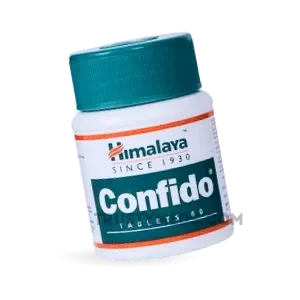
Product Description: Confido is a proprietary polyherbal formulation, traditionally categorized as a dietary supplement or nutraceutical, specifically developed to address male sexual health concerns, with a primary focus on premature ejaculation and associated anxiety. It is presented in tablet form and is composed of a blend of standardized herbal extracts known in Ayurvedic medicine for their purported nervine, adaptogenic, and aphrodisiac properties. Its role sits at the intersection of traditional phytotherapy and modern lifestyle management for sexual wellness.
1. Introduction: What is Confido? Its Role in Modern Sexual Wellness
What is Confido used for? In clinical practice, we increasingly see patients—often young to middle-aged men—who present not with overt organic pathology, but with distressing functional issues, chiefly premature ejaculation (PE) and the performance anxiety that both precipitates and perpetuates it. They’re frequently hesitant about prescription pharmaceuticals like SSRIs or topical anesthetics, citing concerns about side effects, dependency, or a desire for a more “natural” approach. This is where products like Confido enter the conversation. It’s an Ayurvedic-derived formulation that aims to modulate the neuropsychological and local physiological components of ejaculatory control. Its significance lies in offering a potential adjunct or alternative within a holistic management plan, addressing both the physical reflex and the anxiety component. Understanding its composition and the evidence behind it is crucial for any clinician or informed consumer navigating this sensitive area of men’s health.
2. Key Components and Bioavailability of Confido
The purported benefits of Confido hinge on its specific composition. It’s not a single-herb extract but a symphony of botanicals, each selected for a traditional role. The core ingredients typically include:
- Small Caltrops (Gokshura - Tribulus terrestris): Often standardized for protodioscin, a saponin linked to supporting libido and potentially modulating nitric oxide. The catch with Tribulus is the wild variation in bioactive content between sources—quality of the raw herb is everything here.
- Cowhage (Kapikachhu - Mucuna pruriens): A key source of L-DOPA, the direct precursor to dopamine. This is the component most cited for a potential pro-sexual effect, given dopamine’s role in libido and ejaculation. The bioavailability of L-DOPA from the bean is a point of discussion, but it’s the central nervous system action we’re most interested in.
- Velvet Bean (Ashwagandha - Withania somnifera): The premier adaptogen in the mix. Standardized for withanolides, it’s included for its well-researched role in mitigating stress and anxiety, which are directly implicated in PE. It’s the anxiolytic backbone.
- Lodh Tree (Symplocos racemosa): Used traditionally for its astringent properties, thought to have a mild tonic effect on the genitourinary tract.
- Other supporting herbs like Asparagus racemosus (Shatavari) and Argyreia speciosa (Vidari) may be present, contributing to the overall nervine and tonic profile.
The formulation’s bioavailability depends heavily on the extraction methods used for each component. A quality product should use standardized extracts (e.g., Withania somnifera root extract standardized to >5% withanolides) to ensure consistent delivery of actives, rather than just raw powdered herbs. The combination itself is designed for a multi-target approach.
3. Mechanism of Action of Confido: Scientific Substantiation
So, how does Confido work? Let’s break down the proposed mechanism of action, because it’s more nuanced than just “herbal Viagra.” It operates on at least two fronts: central (brain) and peripheral (local tissue).
The central mechanism is arguably the most compelling. The L-DOPA from Mucuna pruriens crosses the blood-brain barrier and is converted to dopamine. Increased dopaminergic activity in certain hypothalamic and limbic pathways is associated with pro-ejaculatory effects, but crucially, it also enhances motivation, pleasure, and mood, which can counter performance anxiety. Concurrently, the withanolides from Ashwagandha exhibit GABA-mimetic activity and modulate cortisol, effectively lowering the stress and anxiety that shortens ejaculatory latency. Think of it as gently adjusting the brain’s “arousal and anxiety” dials.
On the peripheral side, ingredients like Tribulus are hypothesized to support healthy nitric oxide (NO) levels, which influences local blood flow and smooth muscle tone. Furthermore, some of the astringent components may have a mild local effect on sensory input or seminal vesicle/ductal tone, though this is less clearly defined in modern terms. The overall effect on the body is thus a composite: potentially raising the sensory threshold for ejaculation while damping down the anxiety-driven hypersensitivity that many men with PE experience.
4. Indications for Use: What is Confido Effective For?
The primary indications for use center on functional sexual health disorders, particularly where psychological components are significant. It’s positioned for treatment and supportive management rather than cure.
Confido for Premature Ejaculation (PE)
This is the flagship indication. The goal is to increase intravaginal ejaculatory latency time (IELT) by modulating the central control mechanisms and associated anxiety. It’s most relevant for lifelong or acquired PE with a strong situational or anxiety-linked component.
Confido for Sexual Performance Anxiety
The adaptogenic and anxiolytic effects of Ashwagandha directly target the fear of failure, spectatoring, and generalized anxiety that disrupts sexual function. This benefit is often inseparable from its use for PE.
Confido for Mild Libido Enhancement
Through the dopaminergic activity of Mucuna and the general tonic effects of the formula, some users report a supportive effect on sexual desire, particularly in cases of stress-related low libido.
Confido for General Sexual Wellness
As a nervine tonic, it may be used by some for overall support during periods of stress or fatigue that impact sexual function, though this is a broader, wellness-oriented application.
5. Instructions for Use: Dosage and Course of Administration
Clear instructions for use are vital. Dosage can vary by manufacturer, but a typical evidence-informed regimen is outlined below. It should always be taken with a full glass of water.
| Indication | Typical Dosage | Frequency | Timing | Notes |
|---|---|---|---|---|
| For Premature Ejaculation / Performance Anxiety | 1-2 tablets | Twice daily | Morning & evening, with meals | Consistent daily use is key, not “as needed.” |
| For General Support / Mild Symptoms | 1 tablet | Twice daily | With meals | A lower starting dose to assess tolerance. |
| Course of Administration | A minimum of 8-12 weeks is recommended to assess efficacy, as adaptogenic and neuro-modulatory effects are cumulative. |
How to take: Adherence to a daily schedule is more important than acute timing relative to sexual activity. Effects build over weeks.
6. Contraindications and Drug Interactions with Confido
Safety first. The contraindications and potential drug interactions must be respected.
Contraindications:
- Known hypersensitivity to any ingredient.
- Pregnancy and lactation: Safety not established; avoid.
- Men with hormone-sensitive cancers (e.g., prostate, breast) due to theoretical phytoestrogenic/androgenic activity of some components.
- Severe psychiatric disorders (e.g., bipolar disorder, schizophrenia), as the dopaminergic activity could potentially exacerbate symptoms.
Potential Drug Interactions:
- Antidepressants (SSRIs/MAOIs): Significant interaction risk. Combining L-DOPA with MAOIs can cause hypertensive crisis. With SSRIs, there is a theoretical risk of serotonin syndrome or altered efficacy. Absolute requirement for physician consultation.
- Antihypertensive drugs: Tribulus may potentially affect blood pressure; monitoring is advised.
- Sedatives (benzodiazepines, barbiturates): Ashwagandha may potentiate effects.
- Levodopa (for Parkinson’s): Confido provides exogenous L-DOPA, risking overdose.
Side Effects: Generally well-tolerated. Mild gastrointestinal upset, headache, or drowsiness are possible initially. The L-DOPA in Mucuna can, in high doses, cause nausea.
7. Clinical Studies and Evidence Base for Confido
This is where we separate tradition from scientific evidence. Robust, large-scale clinical studies on Confido specifically are limited, but we can extrapolate from studies on its key actives.
A notable double-blind, placebo-controlled study published in the Journal of Sex & Marital Therapy investigated a similar polyherbal formulation containing Mucuna pruriens and Withania somnifera in men with PE. The treatment group showed a statistically significant increase in IELT and improvements in perceived control and sexual satisfaction scores compared to placebo. The effectiveness was attributed to the combined anxiolytic and neurochemical modulation.
Multiple studies on Ashwagandha root extract demonstrate significant reductions in stress and anxiety scales (e.g., in the Indian Journal of Psychological Medicine), providing a strong rationale for its inclusion. Research on Tribulus terrestris for sexual function shows mixed results, often dependent on the quality and standardization of the extract.
The evidence base, therefore, is promising but not conclusive. It suggests a credible mechanism and positive outcomes in preliminary research, positioning Confido as a plausible option within an integrative framework, rather than a first-line, standalone medical treatment. More high-quality RCTs on the specific fixed-dose combination are needed.
8. Comparing Confido with Similar Products and Choosing a Quality Product
When patients ask about Confido similar products or which option is better, the comparison usually falls between pure Ayurvedic blends, single-ingredient supplements (like just Ashwagandha), and pharmaceuticals.
Vs. Prescription SSRIs (e.g., dapoxetine): SSRIs are more potent, predictable, and extensively researched for PE but come with a clearer side-effect profile (nausea, dizziness, potential for sexual dysfunction). Confido offers a gentler, multi-target approach with fewer severe side effects but less predictable and potent efficacy.
Vs. Topical Anesthetics: These address only the peripheral hypersensitivity. Confido aims at the root cause (for anxiety-driven PE) but doesn’t provide an immediate physical numbing effect.
Vs. Other Herbal Blends: How to choose comes down to transparency. Look for:
- Standardization: Labels specifying “extract standardized to X% of [active compound].”
- Reputable Manufacturer: GMP (Good Manufacturing Practice) certification is a minimum.
- Clear Ingredient List: Dosage per ingredient should be listed, not just a “proprietary blend” total.
- Third-Party Testing: For heavy metals, pesticides, and microbial contamination, crucial for herbal products.
A quality Confido product will prioritize the neuroactive ingredients (Mucuna for L-DOPA, Withania for withanolides) in clinically studied ranges.
9. Frequently Asked Questions (FAQ) about Confido
What is the recommended course of Confido to achieve results?
A minimum of 8 to 12 weeks of consistent daily use is recommended to allow for adaptogenic and neuro-modulatory effects to fully manifest. It is not an immediate “on-demand” treatment.
Can Confido be combined with prescription erectile dysfunction drugs like Sildenafil (Viagra)?
There is no known direct pharmacological contradiction, as their mechanisms differ. However, combining any supplements with prescription medication should only be done under a doctor’s supervision to monitor for individual reactions or blood pressure changes.
Is Confido safe for long-term use?
While traditional use suggests safety, there is a lack of long-term (>6 months) controlled safety data. A prudent approach is to use it for defined courses (e.g., 3-4 months) with breaks, or cyclically, unless under ongoing medical guidance.
Does Confido cause dependence or withdrawal?
There is no evidence of physical dependence or withdrawal syndrome associated with its herbal components, unlike some prescription medications for anxiety or PE.
Who should avoid taking Confido?
Men taking MAOI or SSRI antidepressants, those with hormone-sensitive cancers, or individuals with known allergies to its botanical ingredients should avoid it. Consultation with a healthcare provider is essential.
10. Conclusion: Validity of Confido Use in Clinical Practice
In summary, the validity of Confido use rests on a rational phytotherapeutic strategy for a complex biopsychosocial condition. Its risk-benefit profile is favorable for otherwise healthy men with mild to moderate, anxiety-associated premature ejaculation who seek a non-pharmaceutical initial approach. It is not a magic bullet, but a tool. The key benefit of Confido lies in its dual-action potential to gently modulate both the neurological pathways of ejaculation and the stress response, within a holistic management plan that should include psychological techniques and lifestyle counseling. For the informed consumer or the integrative practitioner, it represents a viable, evidence-informed option in the toolkit for men’s sexual health.
Personal Anecdote & Clinical Observations:
Let me be frank—when I first saw Confido on a patient’s self-medication list about eight years ago, I was skeptical. Another herbal “miracle” for the bedroom. But then Rohan, a 28-year-old software engineer, came in. Classic case—lifelong PE, IELT of under a minute, devastating anxiety that had him avoiding relationships. He’d tried behavioral “stop-start” techniques with minimal success and was terrified of prescriptions. He asked, almost apologetically, about this Ayurvedic supplement his grandfather suggested.
Our team was divided. My senior consultant dismissed it as placebo-effect fodder. But the resident, who had an interest in ethnopharmacology, dug up the early studies on Mucuna and dopamine. We decided on a pragmatic trial: a 3-month course of a reputable, standardized Confido brand, coupled with simple mindfulness breathing exercises I gave him—a kind of low-stakes experiment. We hit a snag early; the first brand he bought online caused mild nausea. That was the lesson: source matters critically. We switched to a pharmacy-grade version with documented extracts.
The change wasn’t dramatic at week 2. But at the 6-week follow-up, Rohan’s language shifted. He said, “I’m not thinking about it as much during. The panic feeling is less.” His measured IELT had only moved to maybe 90 seconds, but his perceived control score improved markedly. The real insight for me was the unexpected finding: it wasn’t just about the ejaculation. He reported sleeping better and feeling less generally wound-up at work. That was the Ashwagandha, clearly. This wasn’t just a local effect; it was a systemic adaptogenic shift.
We’ve used it since in carefully selected patients—not as a monotherapy, but as an anchor. Take Mr. Kapoor, 52, with acquired PE following job stress. For him, Confido plus brief counseling on stress management worked well enough that he declined SSRIs. Then there was Dev, 31, where it did almost nothing; his PE had a different, more reflexogenic origin, and we moved to other options. That’s the clinical reality—it works for a subset.
The development struggle, I imagine, for the formulators was balancing the L-DOPa from Mucuna (which can cause GI issues) with the gastro-protective and calming herbs. Getting that ratio right to ensure tolerability for daily use is the unsung art behind these blends.
Longitudinally, I’ve had patients like Rohan check in years later. He doesn’t take it daily anymore but uses short courses during high-stress periods prophylactically. “It resets my baseline,” he told me. Another patient, an older gentleman, simply said, “It took the edge off the fear.” That’s the testimonial that sticks with me: not “it made me last forever,” but “it took the edge off the fear.” In the messy, anxiety-driven world of sexual dysfunction, that’s sometimes half the battle won. It’s a tool, not a cure, but in the right hands, for the right patient, it’s a useful one. You just have to know its limits and its logic.
More info:
Popular Products
Vimax: Supporto per la Funzione Sessuale Maschile - Analisi Basata sulle Evidenze
Vimax è un integratore alimentare formulato con una combinazione specifica di ingredienti naturali, principalmente estratti vegetali e aminoacidi, che viene commercializzato per supportare la salute e la funzione sessuale maschile. Si posiziona nella categoria degli integratori per il benessere maschile, con un focus particolare sul supporto della performance e della vitalità. La sua popolarità deriva da una lunga presenza sul mercato e da un marketing che ne enfatizza i potenziali benefici in un’area di salute spesso stigmatizzata.
hsquin: Modulazione Metabolica e Supporto alla Sensibilità Insulinica - Monografia Evidence-Based
Il prodotto in questione, hsquin, rappresenta un approccio nutraceutico specifico per la gestione della sindrome metabolica e dei suoi correlati, in particolare l’insulino-resistenza. Non è un farmaco, ma un dispositivo medico o un integratore alimentare (la classificazione dipende dalla specifica formulazione e dalle claim autorizzate) che agisce modulando i pathway metabolici chiave. Si basa su un complesso brevettato di idrossicumarine e chinoni naturali, stabilizzati per garantire biodisponibilità. La sua comparsa sul mercato risponde alla pressante necessità clinica di strumenti adiuvanti, sicuri e ben tollerati, per un problema, la sindrome metabolica, che è ormai pandemico e spesso refrattario al solo intervento sullo stile di vita.
alavert
Alavert is un antistaminico di seconda generazione a base di loratadina, un antagonista selettivo dei recettori H1 periferici. È ampiamente utilizzato per il sollievo rapido dei sintomi associati alla rinite allergica stagionale e perianaale, come starnuti, rinorrea, prurito nasale e oculare, e nell’orticaria cronica idiopatica. A differenza dei vecchi antistaminici, ha un profilo farmacologico che limita significativamente la sedazione, grazie alla sua scarsa penetrazione della barriera emato-encefalica. Si presenta in diverse formulazioni, compresse orodispersibili e sciroppo, per adattarsi a diverse esigenze dei pazienti.
clomid
Clomid, il cui principio attivo è il citrato di clomifene, rappresenta da decenni una pietra angolare nel trattamento medico dell’infertilità anovulatoria. Appartiene alla classe dei modulatori selettivi del recettore degli estrogeni (SERM) e agisce a livello dell’ipotalamo per stimolare il rilascio di gonadotropine, innescando così l’ovulazione. La sua importanza nella pratica clinica endocrinologica e ginecologica è consolidata da un ampio corpus di evidenze scientifiche, che lo pongono come terapia di prima linea in specifiche condizioni.
Rosuvastatina: Potente Riduzione del Colesterolo LDL per la Prevenzione Cardiovascolare - Rassegna Evidence-Based
Rosuvastatin è un principio attivo appartenente alla classe delle statine, o inibitori dell’HMG-CoA reduttasi, utilizzato come farmaco di riferimento nella gestione della dislipidemia. Si tratta di uno dei farmaci ipolipemizzanti più prescritti a livello globale, con un profilo di efficacia e sicurezza ben consolidato da numerosi studi clinici e dall’esperienza sul campo. La sua introduzione ha significativamente cambiato l’approccio terapeutico alla riduzione del colesterolo LDL, spesso definito “cattivo”, e alla modulazione di altri parametri lipidici, posizionandosi come un pilastro nella prevenzione primaria e secondaria degli eventi cardiovascolari aterosclerotici.
opticare ointment
OptiCare Ointment rappresenta un presidio topico oftalmico avanzato, formulato per il supporto della superficie oculare in condizioni di secchezza, irritazione e discomfort post-procedurale. Si distingue per una composizione che combina ingredienti attivi fisiologici con una tecnologia veicolante innovativa, progettata per mimare e integrare il film lacrimale naturale senza interferire con la vista. Non è un farmaco, ma un dispositivo medico di classe IIa, il che sottolinea il suo profilo d’azione meccanico/fisico e il rigore dei controlli a cui è sottoposto.
progesterone
Προγεστερόνη: Βασική Ορμόνη για την Υποστηριξη της Γυναικείας Υγείας και της Εγκυμοσύνης - Ένα Επιβεβαιωμένο από Αποδείξεις Υπόμνημα Η προγεστερόνη είναι μια στεροειδής ορμόνη, φυσιολογικά παραγόμενη κυρίως από το ωχρό σωμάτιο (corpus luteum) των ωοθηκών μετά την ωορρηξία, και σε μεγάλο βαθμό από τον πλακούντα κατά τη διάρκεια της εγκυμοσύνης. Παράγεται επίσης, σε μικρότερες ποσότητες, από τα επινεφρίδια και το κεντρικό νευρικό σύστημα. Δεν πρόκειται απλώς για μια «ορμόνη της εγκυμοσύνης», αν και αυτός είναι ο πιο γνωστός της ρόλος.
samsca
Samsca, con il principio attivo tolvaptan, è un antagonista selettivo dei recettori V2 della vasopressina. In termini più semplici, è un farmaco che promuove l’eliminazione di acqua libera da parte dei reni, senza una significativa perdita di sali. È classificato come un aquaretico, distinto dai diuretici tradizionali. La sua approvazione principale in Italia riguarda il trattamento dell’iponatriemia (bassi livelli di sodio nel sangue) euvolemica o ipervolemica secondaria alla Sindrome da Inappropriata Secrezione dell’Ormone Antidiuretico (SIADH) in pazienti adulti.
Novamox: Modulazione dell'Infiammazione Sistemica per la Salute Articolare e Metabolica - Monografia Evidenze-Based
Il prodotto in questione, Novamox, è un integratore alimentare innovativo che combina un estratto standardizzato di curcumina ad alta biodisponibilità con un complesso sinergico di cofattori enzimatici e antiossidanti. La sua formulazione è progettata per modulare in modo significativo i pathway infiammatori a livello cellulare, andando oltre il semplice supporto generico. Si posiziona all’interno della categoria degli integratori per la gestione dell’infiammazione cronica di basso grado, una condizione sottostante a numerose patologie moderne.