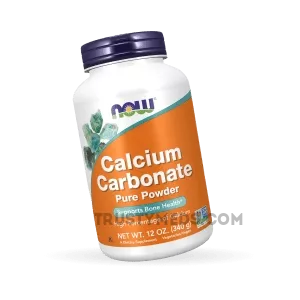
Calcium Carbonate: Essential Support for Bone Health and Acid Neutralization - Evidence-Based Review
| Dosaggio del prodotto: 250 mg | |||
|---|---|---|---|
| Confezione (n.) | Per compresse | Prezzo | Acquista |
| 30 | €1.16 | €34.93 (0%) | 🛒 Aggiungi al carrello |
| 60 | €0.98 | €69.85 €58.78 (16%) | 🛒 Aggiungi al carrello |
| 120 | €0.89 | €139.71 €107.34 (23%) | 🛒 Aggiungi al carrello |
| 270 | €0.76 | €314.34 €204.45 (35%) | 🛒 Aggiungi al carrello |
| 360 | €0.70
Migliore per compresse | €419.12 €253.00 (40%) | 🛒 Aggiungi al carrello |
| Dosaggio del prodotto: 500 mg | |||
|---|---|---|---|
| Confezione (n.) | Per compresse | Prezzo | Acquista |
| 30 | €2.10 | €63.04 (0%) | 🛒 Aggiungi al carrello |
| 60 | €1.77 | €126.08 €106.48 (16%) | 🛒 Aggiungi al carrello |
| 120 | €1.62 | €252.15 €194.23 (23%) | 🛒 Aggiungi al carrello |
| 270 | €1.37 | €567.34 €368.86 (35%) | 🛒 Aggiungi al carrello |
| 360 | €1.27
Migliore per compresse | €756.46 €455.75 (40%) | 🛒 Aggiungi al carrello |
Sinonimi | |||

Product Description: Calcium carbonate, CaCO₃, is one of the most ubiquitous and fundamental compounds in both nature and clinical practice. In its purified pharmaceutical form, it appears as a fine, white, odorless powder or compressed into tablets. Its primary role in medicine is as a source of elemental calcium, a critical mineral ion essential for a vast array of physiological functions, from neuromuscular signaling to cellular metabolism. Beyond its use as a dietary supplement, it serves as an active pharmaceutical ingredient in over-the-counter antacids, providing rapid relief from gastric hyperacidity. Its significance lies in its dual utility: a foundational building block for skeletal health and a first-line agent for symptomatic gastrointestinal relief. The journey of this simple salt from chalk cliffs to medicine cabinets is a testament to its efficacy and safety profile, though its application is far from simplistic and requires nuanced understanding to maximize benefit and minimize risk.
1. Introduction: What is Calcium Carbonate? Its Role in Modern Medicine
So, what is calcium carbonate used for, really? If you ask most people, they’ll say “for strong bones,” and they’re not wrong. But in the clinic, its utility is beautifully dualistic. Chemically, it’s just a salt—calcium cation, carbonate anion. But physiologically, it’s a workhorse. As a supplement, it addresses the pervasive issue of inadequate dietary calcium intake, which is a primary modifiable risk factor for osteoporosis and fractures, especially in postmenopausal women and the elderly. Concurrently, its rapid reaction with gastric hydrochloric acid makes it a potent, fast-acting antacid. This dual-identity is what makes it so fascinating and sometimes tricky to manage. You’re not just prescribing a pill; you’re managing a key electrolyte, influencing gastric pH, and potentially affecting the absorption of half a dozen other medications. It’s humble, but it demands respect.
2. Key Components and Bioavailability of Calcium Carbonate
The composition of calcium carbonate is straightforward, but the conversation about its bioavailability is where things get interesting. It contains a high percentage (40%) of elemental calcium by weight, making it one of the most concentrated oral sources. A 1250 mg tablet yields 500 mg of absorbable calcium. But here’s the catch—and I’ve seen this trip up even seasoned clinicians—its absorption is inherently pH-dependent.
The carbonate form requires an acidic environment for optimal dissolution and ionization. In a patient with normal gastric acid secretion, taken with a meal, its absorption is reasonably good, around 20-30%. However, in older adults or patients on proton pump inhibitors (PPIs) like omeprazole, where gastric acidity is reduced, absorption can plummet. That’s a critical insight. We had a case, Mrs. Alina, 72, on long-term pantoprazole for GERD, whose bone density kept declining despite “adequate” calcium carbonate supplementation. We switched her to calcium citrate at a multidisciplinary meeting—some pushback about cost, sure—but her follow-up labs showed improved calcium indices. The formulation and the patient’s individual physiology are inseparable. Chewable or effervescent forms can improve dissolution, and combining it with vitamin D is non-negotiable for enhancing intestinal absorption.
3. Mechanism of Action of Calcium Carbonate: Scientific Substantiation
How does calcium carbonate work? It operates through two distinct, well-characterized pathways.
1. Skeletal Mineralization: Once absorbed, ionic calcium enters the extracellular pool. It’s a key player in bone remodeling, being deposited into the hydroxyapatite crystal matrix under the influence of osteoblasts. It’s not a stimulant; it’s a substrate. Adequate supply helps maintain a positive bone balance, suppressing parathyroid hormone (PTH)-mediated bone resorption. Think of it as providing the raw bricks for constant, ongoing skeletal repair.
2. Acid Neutralization: This is straightforward chemistry in a biological system. In the stomach: CaCO₃ + 2HCl → CaCl₂ + H₂O + CO₂. The carbonate binds free hydrogen ions, raising gastric pH rapidly. The generated carbon dioxide can cause belching or bloating—the “chalky burp” patients complain about. The antacid effect is topical and transient, lasting about 30-60 minutes, which is perfect for episodic heartburn but inadequate for healing erosive esophagitis. This mechanistic divide is crucial for setting patient expectations.
4. Indications for Use: What is Calcium Carbonate Effective For?
Its applications are broad, but the evidence strength varies. It’s not a panacea.
Calcium Carbonate for Osteoporosis Prevention and Treatment
This is its cornerstone use. The evidence base from large trials like the Women’s Health Initiative supports calcium (with vitamin D) in reducing bone loss and fracture risk, particularly hip fractures, in deficient populations. It’s foundational therapy. But I always stress: it’s a supplement to lifestyle and pharmacotherapy (like bisphosphonates), not a replacement.
Calcium Carbonate for Dyspepsia and GERD
For occasional, mild-to-moderate heartburn or dyspepsia, it’s highly effective and safe. It’s my first recommendation for PRN use. For a patient like David, a 45-year-old with stress-induced heartburn, keeping a roll of chewables in his desk drawer changed his quality of life without needing a prescription. For true, frequent GERD, however, we’re talking about H2 blockers or PPIs for mucosal healing.
Calcium Carbonate for Hypocalcemia
In chronic, mild hypocalcemia—often secondary to hypoparathyroidism or chronic kidney disease—it’s a first-line oral agent to normalize serum levels. Dosing needs to be titrated carefully with frequent monitoring.
Calcium Carbonate for Phosphate Binding in CKD
In late-stage chronic kidney disease, hyperphosphatemia is a major concern. Here, calcium carbonate is used not primarily for calcium, but because the carbonate binds dietary phosphate in the gut, forming insoluble calcium phosphate, which is excreted. The dose for this is often much higher than for supplementation, and the risk of hypercalcemia is real, requiring vigilant monitoring.
5. Instructions for Use: Dosage and Course of Administration
Getting the dosage right is everything. More is not better and can be harmful. Here’s a practical guide.
| Indication | Typical Elemental Calcium Dose | Frequency & Timing | Key Notes |
|---|---|---|---|
| Dietary Supplementation | 500-600 mg | 1-2 times daily, WITH FOOD | Do not exceed 500-600 mg per dose for optimal absorption. |
| Osteoporosis Therapy | 1000-1200 mg total daily | Divided doses, with meals | Always co-administer with 800-2000 IU Vitamin D3. |
| Antacid (PRN) | 500-1000 mg (as needed) | As symptoms occur, chewed well | Can be taken without food. Avoid within 2-3 hours of other medications. |
| Phosphate Binder (CKD) | 1500-3000 mg+ daily | With every meal and snack | Dose titrated to serum phosphate/calcium levels. |
Course of Administration: For supplementation, it’s typically a long-term, even lifelong, commitment. For antacid use, it should be short-term. If symptoms require daily use for more than 2 weeks, the patient needs further evaluation—that’s a red flag we can’t ignore.
6. Contraindications and Drug Interactions with Calcium Carbonate
Safety first. The side effects are usually mild (constipation, bloating, gas), but the contraindications and interactions are serious.
Contraindications:
- Hypercalcemia or conditions predisposing to it (e.g., sarcoidosis, certain malignancies).
- Severe renal impairment or history of kidney stones (calcium-oxalate type). There was disagreement in our team about moderate CKD—some argued for citrate, others said carbonate was fine with monitoring. The literature supports caution and individualization.
- Hypophosphatemia.
Major Drug Interactions: This is a daily consult in my practice. Calcium carbonate can bind to and drastically reduce the absorption of many crucial drugs.
- Oral Bisphosphonates (alendronate): Must be separated by at least 2-3 hours. I’ve seen treatment failure because a patient took them together.
- Levothyroxine: Reduces absorption by up to 40%. Dosing must be separated by 4+ hours. This is a classic.
- Tetracycline & Fluoroquinolone Antibiotics: Chelation occurs, rendering the antibiotic ineffective.
- Iron Supplements: Mutual inhibition of absorption. Separate by 2-3 hours.
- Potassium-Sparing Diuretics (e.g., triamterene): Increases risk of hypercalcemia.
Pregnancy & Lactation: Generally considered safe at recommended dietary levels, but megadosing is contraindicated. Always advise consulting an OB/GYN.
7. Clinical Studies and Evidence Base for Calcium Carbonate
The clinical studies on calcium carbonate are vast, but the conclusions require careful interpretation. The early enthusiasm from observational studies was tempered by later meta-analyses.
For bone health, the 2006 Women’s Health Initiative trial (N=36,282) found that calcium carbonate (1000 mg/day) with vitamin D (400 IU/day) modestly increased hip bone density and reduced hip fracture risk in adherent women, though the overall fracture reduction was not significant. Subsequent meta-analyses confirm a small but real benefit in fracture prevention, primarily in those with low baseline intake.
For antacid action, the evidence is more pharmacodynamic than long-term clinical. Its ability to raise gastric pH >4 within minutes is well-documented. A 2019 systematic review in Alimentary Pharmacology & Therapeutics reaffirmed antacids as effective for episodic symptom relief.
The most controversial area is cardiovascular risk. Some large observational studies raised flags about a potential link between high-dose calcium supplements (without food) and increased risk of myocardial infarction. The hypothesis involves acute spikes in serum calcium. The consensus now, from bodies like the National Osteoporosis Foundation, is that dietary calcium is preferred, but supplement use with meals, staying within recommended limits, has a favorable risk-benefit profile for those who need it. This was a sobering lesson in not assuming long-term safety for even the most benign-seeming interventions.
8. Comparing Calcium Carbonate with Similar Products and Choosing a Quality Product
When patients ask which calcium is better, it’s a teaching moment. The main competitor is calcium citrate.
| Feature | Calcium Carbonate | Calcium Citrate |
|---|---|---|
| Elemental Calcium % | High (40%) | Lower (21%) |
| Absorption Needs Acid | Yes | No |
| Best For | Individuals with normal stomach acid, taking with meals. Cost-effective. | Older adults, those on PPIs/H2 blockers, achlorhydria, taken with or without food. |
| Cost | Generally lower | Generally higher |
How to choose a quality product:
- Look for USP Verification: This ensures purity, potency, and disintegration.
- Check for Lead: Reputable brands test for heavy metal contamination.
- Avoid “Natural” Hype: Oyster shell or dolomite are still just calcium carbonate and can have higher lead levels.
- Consider Combination: Many formulas now include magnesium and vitamin D, which is practical for bone health regimens.
9. Frequently Asked Questions (FAQ) about Calcium Carbonate
What is the recommended course of calcium carbonate to achieve results for bones?
For bone health, it’s a long-term strategy. Improvements in bone mineral density can be detected after 1-2 years of consistent use with adequate vitamin D. It’s a maintenance therapy, not a quick fix.
Can calcium carbonate be combined with blood pressure medications?
Yes, but with caution. It can interact with certain diuretics (thiazides increase calcium reabsorption, risking hypercalcemia). It does not directly affect most ACE inhibitors or ARBs, but always advise patients to separate dosing by at least 2 hours from all other medications to be safe.
Is it safe during pregnancy?
At recommended dietary supplement levels (e.g., 1000 mg elemental calcium daily), it is generally considered safe and is often in prenatal vitamins. However, high-dose antacid use should be discussed with a doctor due to theoretical risks.
What are the signs of taking too much calcium carbonate?
Fatigue, excessive thirst, frequent urination, nausea, vomiting, constipation, and confusion can signal hypercalcemia. Long-term excess can contribute to kidney stones and vascular calcification.
10. Conclusion: Validity of Calcium Carbonate Use in Clinical Practice
In conclusion, calcium carbonate remains a valid, essential, and cost-effective tool in both preventive and symptomatic medicine. Its risk-benefit profile is excellent when used appropriately: for the right patient, at the right dose, with the right timing, and with awareness of its interactions. It is not a “set it and forget it” prescription. Its utility is maximized when integrated into a holistic management plan—diet, exercise, fall prevention, and specific pharmacotherapy when indicated. For acid relief, it’s a reliable and rapid responder. In our quest for ever-more-complex therapies, we shouldn’t overlook the profound utility of this fundamental compound.
Personal Anecdote & Clinical Experience:
I remember when I first started out, I thought calcium carbonate was the simplest thing to prescribe. Just tell them to take it for their bones. Then I met Mr. Henderson. He was 68, on levothyroxine for hypothyroidism, and his TSH was wildly unstable despite seemingly appropriate dosing. He was also complaining of new constipation. Going through his meds, he casually mentioned taking his thyroid pill with his “calcium for bones” every morning with breakfast. Bingo. We spent 10 minutes talking about timing—thyroid at 6 AM, calcium with lunch and dinner. His TSH normalized in 8 weeks, and his constipation resolved. It was a small intervention with a massive impact.
Another case that taught me about formulation was a retired nurse, Eleanor. Sharp as a tack, but her osteoporosis was progressing on calcium carbonate. She was also on a PPI. We had a debate in our team meeting; some thought we should just increase her dose. I pushed for a switch to citrate, arguing about the achlorhydria. We switched. Her next DEXA scan showed stabilization. It wasn’t a miracle, but it was the right tool for her physiology.
The development of our clinic’s bone health protocol wasn’t smooth. There was a fierce disagreement about whether we should standardize on citrate due to our aging population, despite the higher cost. The pharmacy team was concerned about budgets. We compromised by creating a decision tree: new patients over 65 or on acid suppressants start with citrate; others, with carbonate. It’s imperfect but pragmatic.
The most unexpected finding? How many patients on calcium carbonate for years have never had a 25-hydroxyvitamin D level checked. It’s like building a house without a foreman. We instituted routine D testing for all bone health patients, and the rate of insufficiency was over 70%. Correcting that made the calcium work better.
I followed up with David, the heartburn patient, last year. He’s mostly off the antacids now after losing some weight and managing stress better. But he keeps that roll of tablets in his bag. “Just knowing it’s there,” he said, “makes me need it less.” Sometimes, the psychological security of a simple, effective remedy is part of the therapy itself. Calcium carbonate, in its unassuming way, provides that for millions. It’s a reminder that in medicine, mastering the fundamentals is often where the greatest good is done.
More info:
Popular Products
Toba Eye Drops: Sollievo Sintomatico e Supporto Fisiologico per la Superficie Oculare - Monografia Evidenze-Based
Prodotto: Toba Eye Drops. Una soluzione oftalmica sterile, monodose, a base di un principio attivo naturale derivato dalla pianta Tabebuia avellanedae (Lapacho), noto per le sue proprietà antinfiammatorie, antiossidanti e di modulazione del film lacrimale. Si posiziona come un dispositivo medico di classe IIa per il trattamento sintomatico dell’occhio secco lieve-moderato e dell’affaticamento oculare, supportando la fisiologia della superficie oculare. Meta Description (as a comment, for guidance): 1. Introduzione: Cosa sono i Toba Eye Drops?
trimox
Prima di tutto, dobbiamo chiarire di cosa stiamo parlando. Quando mi chiedono del Trimox, in studio, parto sempre dall’inizio. Non è un farmaco, è importante dirlo subito. È un integratore alimentare, una composizione specifica di principi attivi naturali pensata per modulare il metabolismo e supportare la gestione del peso corporeo. Lo vedo come uno strumento, non una bacchetta magica. La sua rilevanza oggi è enorme, considerando l’epidemia di sindrome metabolica, insulino-resistenza e quelle situazioni di “fatica metabolica” dove la dieta e l’esercizio da soli sembrano arenarsi.
aciclovir
Aciclovir è un farmaco antivirale di sintesi, un analogo nucleosidico della guanosina, che rappresenta da decenni il cardine della terapia contro le infezioni da virus herpes simplex (HSV) e varicella-zoster (VZV). La sua introduzione ha rivoluzionato la gestione di condizioni che vanno dall’herpes labiale ricorrente all’encefalite erpetica, patologia potenzialmente letale. Questo farmaco, disponibile in formulazioni topiche, orali e parenterali, agisce come un “ingannatore” molecolare, interrompendo selettivamente la replicazione del DNA virale nelle cellule infette, con un impatto minimo sui processi cellulari dell’ospite.
betoptic
Betoptic, o betaxololo cloridrato allo 0,5% in sospensione oftalmica, rappresenta un cardine nel trattamento del glaucoma ad angolo aperto e dell’ipertensione oculare. Appartenente alla classe dei beta-bloccanti selettivi β1, il suo sviluppo ha segnato un punto di svolta, offrendo un profilo di sicurezza cardiovascolare potenzialmente più favorevole rispetto ai beta-bloccanti non selettivi come il timololo. La sua introduzione ha risposto a una precisa necessità clinica: controllare efficacemente la pressione intraoculare (PIO) in pazienti con comorbidità sistemiche, come l’asma o la broncopneumopatia cronica ostruttiva (BPCO), per i quali i beta-bloccanti non selettivi erano spesso controindicati.
ciloxan ophthalmic solution
Ciloxan Ophthalmic Solution è una preparazione sterile, topica, contenente l’antibiotico fluorochinolonico ciprofloxacina come cloridrato. Si presenta come una soluzione limpida, incolore o leggermente giallastra, confezionata in flaconi contagocce da 5 ml. È classificato come un farmaco soggetto a prescrizione medica e non come un dispositivo medico o un integratore alimentare. Il suo ruolo nella moderna oftalmologia è ben consolidato: è un agente antimicrobico ad ampio spettro utilizzato per trattare infezioni oculari superficiali causate da ceppi batterici sensibili.
zestril
Zestril, il cui principio attivo è il lisinopril, appartiene alla classe terapeutica degli ACE-inibitori (inibitori dell’enzima di conversione dell’angiotensina). È un farmaco di prescrizione fondamentale nella gestione dell’ipertensione arteriosa e dello scompenso cardiaco, nonché nella nefropatia diabetica. Si presenta in compresse di diverso dosaggio (ad es., 5 mg, 10 mg, 20 mg) e agisce bloccando un enzima chiave nel sistema renina-angiotensina-aldosterone (RAAS), portando a vasodilatazione e riduzione del carico di lavoro cardiaco.
cephadex
Il prodotto in questione, che chiameremo Cephadex per questo approfondimento, è un dispositivo medico di classe IIa, registrato secondo la direttiva 93/42/CEE o il regolamento MDR (UE) 2017/745. Si tratta di un sistema di compressione pneumatica intermittente (IPC) a camera singola o multi-camera, progettato per la terapia del linfedema e dell’edema venoso agli arti inferiori. Il dispositivo è costituito da un’unità di controllo elettronica, una pompa d’aria e un manicotto avvolgibile gonfiabile, che viene applicato alla gamba.
sumycin
Il prodotto in questione, Sumycin, è un antibiotico ad ampio spettro appartenente alla classe delle tetracicline. Il suo principio attivo è la tetraciclina cloridrato. Viene utilizzato da decenni in ambito clinico per il trattamento di un’ampia gamma di infezioni batteriche, sebbene il suo utilizzo sia oggi più selettivo a causa dell’emergere di resistenze e della disponibilità di alternative potenzialmente meglio tollerate. La sua azione si esplica attraverso l’inibizione della sintesi proteica batterica, legandosi alla subunità 30S dei ribosomi, impedendo così l’attacco del complesso aminoacil-tRNA al sito accettore dell’mRNA.
Crema di Estriolo: Terapia Topica Efficace per l'Atrofia Vulvovaginale - Monografia Evidenze-Based
Prodotto: Crema a base di estriolo, formulazione topica per applicazione vaginale e vulvare. Categoria: dispositivo medico o integratore topico (a seconda della classificazione regionale), utilizzato per il trattamento dei sintomi urogenitali della carenza di estrogeni, in particolare nell’ambito della sindrome genito-urinaria della menopausa (GSM), precedentemente nota come atrofia vulvovaginale. 1. Introduzione: Cos’è la Crema di Estriolo? Il suo Ruolo nella Terapia Ormonale Moderna Quando parliamo di terapia ormonale in menopausa, il pensiero va spesso agli estrogeni sistemici.